The overall design of the handball hall of Hangzhou Asian Games is full of science and technology.
CCTV News:The handball competition time of Hangzhou Asian Games is September 24th — On October 5, up to now, 22 male and female teams from 15 countries (regions) have participated in the competition, which will produce 2 gold medals. The handball hall of Hangzhou Asian Games, located in Xiaoshan Campus of Zhejiang Normal University, is one of the 12 newly-built venues of this Asian Games. Next, let’s go to the hall with CCTV reporters from the general station.
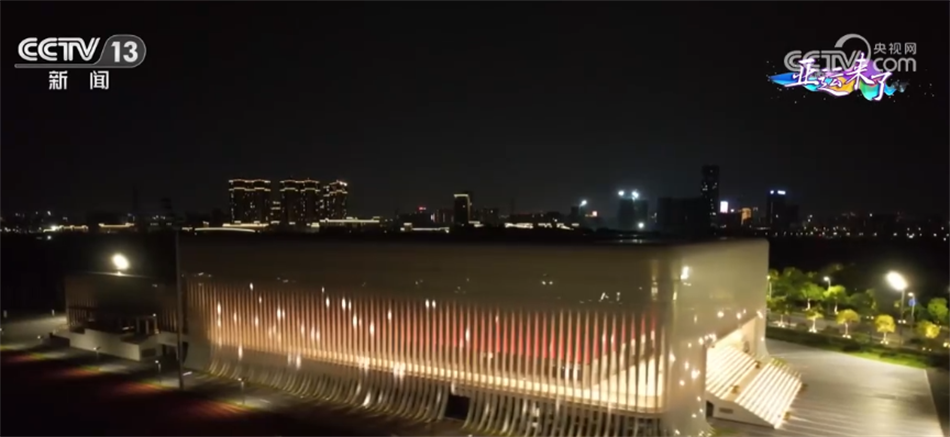
The handball hall of Hangzhou Asian Games consists of two parts: the warm-up hall and the competition hall. The appearance of the whole building is simple but not simple. Outside the main hall and the sub-hall, there are ribbons of silk, which slowly fall from the top of the hall and extend to the ground. These ribbons are called "water curtains", with a total of 308 strands. Each strand of "water curtains" is equipped with lights near the ground, so that at night, the handball hall can show a specific pattern.
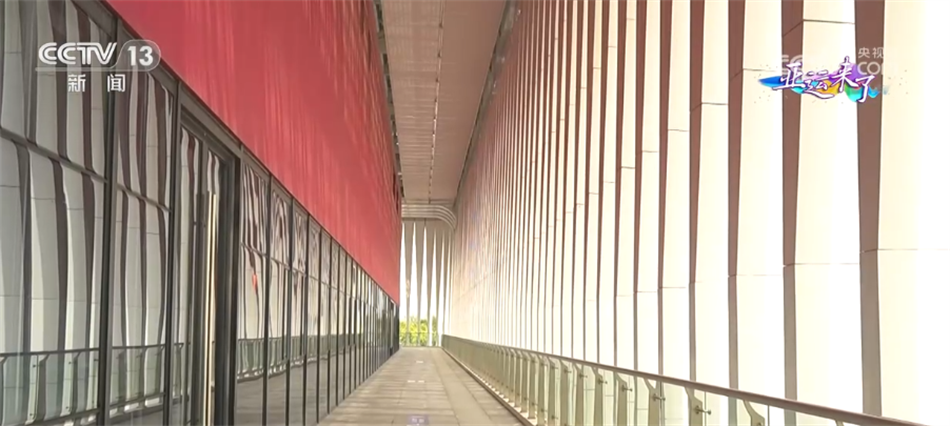
CCTV reporter Ren Meimei:Now we come to the outdoor second-floor platform of the handball hall and enter the interior of the "water curtain". These hanging "water curtains" are actually not only decorations, but also have practical functions. They can play the role of heat insulation just like shutters, and can also reduce glare and improve indoor visual comfort.
Handball originated in Denmark, which is a ball game developed by combining the characteristics of basketball and football, with "chasing" and "fighting" as its main features.
Handball requires athletes to run, jump and throw on the field, with frequent physical contact and fierce antagonism. For the audience in the handball hall of the Hangzhou Asian Games, the fierce competition here is not only "overwhelming", but also "no dead ends" for everyone to watch the game in the handball hall.
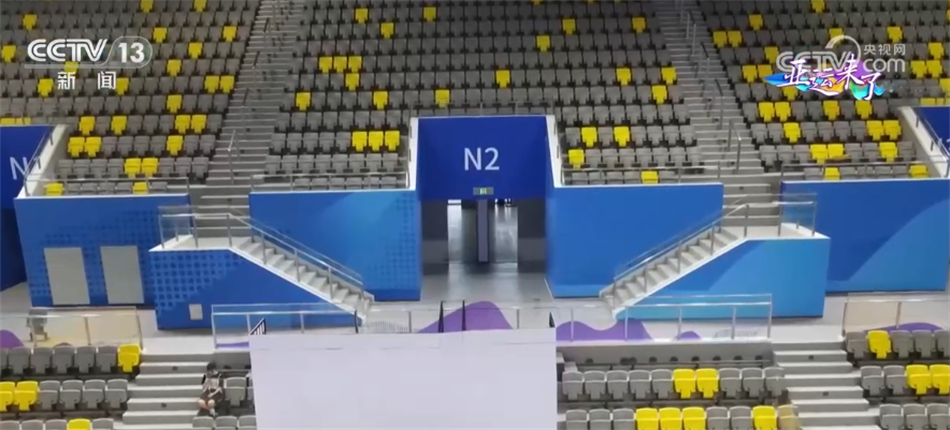
There are 2,244 seats in the court, each seat can let the audience see the position 1 meter above the most sideline of the handball court, and the athletes’ every move can be seen at a glance. This effect comes from the asymmetric two-sided stands built by the design team after a lot of data research in the early stage. In addition, in order to achieve the goal of "no dead angle", the whole venue also adopted the beam string structure design, and there was no pillar in the 3,000-square-meter hall.
In addition, the use of the venue after the game was fully considered at the beginning of the construction. The handball venue is actually a wooden floor basketball court made according to FIBA standards. During the Asian Games in Hangzhou, a special PVC floor was laid on the field to become a handball competition venue. After the Asian Games, the main hall can be transformed into venues for basketball, volleyball, badminton, table tennis and judo, and the auxiliary hall can also be equipped with various competition equipment and fitness equipment to meet the different needs of teachers and students in the whole school.