History of Self-portrait: From Narcissus Teenager to Self-portrait Girl

Narcissus daffodil teenager.

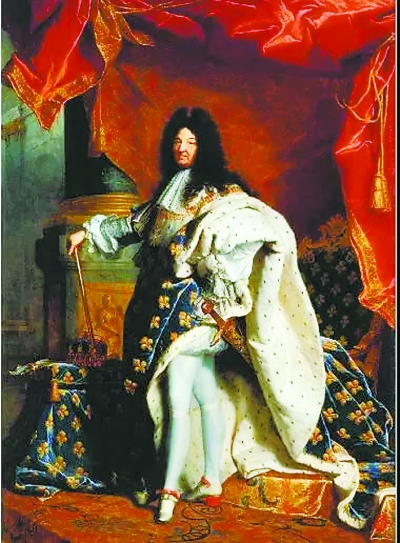
Trigaud, a French court painter, works "Full-length portrait of Louis XIV in coronation suit at the age of 63".

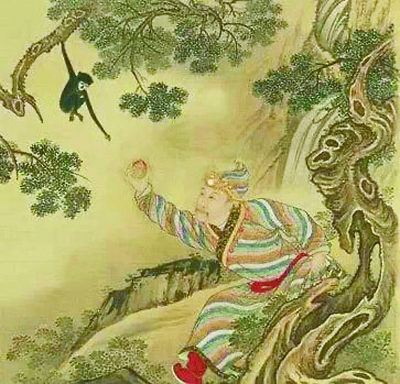
Selected Pictures of Yongzheng Carpe diem.

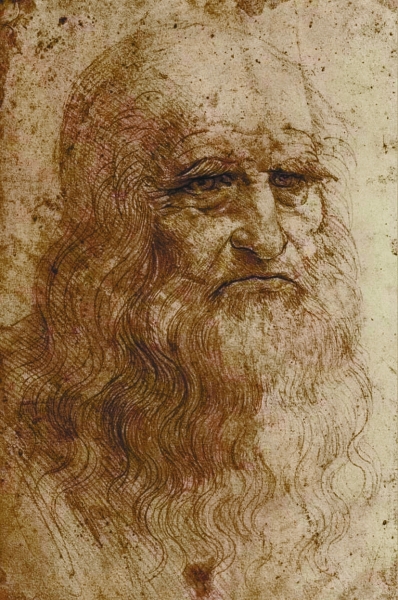
Self-portrait of the famous painter Leonardo da Vinci.

Japanese astronaut Akihiko Shingo takes a selfie in space.

  As early as ancient Greece, the Oracle of "Know Yourself" was engraved on the lintel of Apollo Temple. This is an inevitable question in everyone’s life: who am I? Who am I? Is this what others think of me as? … … Self-focusing "selfie" is what we think of as proof of our interaction with others.

  Self-portrait is popular in the internet age, but "self-portrait" is not the product of the internet age. People have always been enthusiastic about themselves, but in the past, they were limited by technical conditions, and the privilege of seeing their own visual images belonged to only a few people. After the Renaissance, painters with technical advantages picked up brushes and combined self-portrait with art. With the advent of photography, it is possible for ordinary people to record themselves. After that, the rapid development of digital cameras and high-definition mobile phones, as well as the fuel of Internet information sharing, ushered in a big explosion of self-portraits, machine imaging.

  Privilege of nobility — — Portrait of the emperor

  Narcissus is a beautiful boy in Greek myths and legends. When he was born, his parents received the proverbs from the prophet — — Don’t let him see his face clearly. However, at the age of sixteen, Narcissus caught a glimpse of his face when he passed a mirror-clear lake in the forest. The beautiful boy was addicted to the reflection in the water, and finally fell into the bottom of the lake and turned into a daffodil on the shore.

  The inverted image of daffodil teenagers is a metaphor of human self-cognition. Humans observe four situations and exchange information with others to understand and define the world around them; At the same time, human beings also examine their own external presentation, show it to others in various ways, and define themselves through feedback from others. Just as Charles Horton Cooley, an American sociologist, expounded the "Byakki Smoker" theory in "Human Nature and Social Order" in 1902: "We understand ourselves by imagining how others feel about our behavior and appearance" — — And this may be the endogenous force for the long-lasting self-portrait.

  Self-gaze was born at the beginning of human cognition. A primitive man who came back from hunting with a full load may be to show his strength, or to record the moment of victory. In short, he will draw murals of his hunting with colored soil by the light of the bonfire in the cave. These primitive murals can be regarded as the earliest self-portraits of human beings. Therefore, selfie has a long history. In the years when human beings have not mastered photography technology, portrait is the original form of selfie.

  Before the 16th century, only the aristocrats could hire painters to see their own visual images. Although the portrait is not written by myself, they pay the painter, so it is their preference, not the painter’s, that determines the direction of the painting. The portraits of emperors in the era of centralization are not only for recording, but also for showing the authority of emperors. King Louis XIV of France claimed to be the king of the sun. In one of his widely circulated portraits, Louis XIV wore a golden laurel and portrayed himself as Apollo. Queen Elizabeth I left hundreds of portraits, but most of them looked like the same one — — Almost fair skin and unsmiling expression — — The real Elizabeth had smallpox, her face was full of potholes, and her mouth was rotten because she ate too much sugar. Compared with real people, portraits are obviously beautified.

  The portrait with the most selfie style comes from Yongzheng, a fan of "Let’s have fun". The "map of pleasure", which began in Nanqi, usually depicts the royal entertainment life. Back to Yong Zhengdi, he was the absolute master of his "map of pleasure". Yongzheng’s "map of pleasure and pleasure" is not only a display of external imperial power, but also related to the inner side of "poetry and distance" Long before he ascended the throne, a silk painting called "Plough and Weaving in Yin Zhen" revealed this clue. In the picture scroll, Yongzheng dressed himself as a farmer who stood on the ridge with an umbrella and led the people to harvest. In the later "Atlas of Joy and Joy in Yongzheng" (collected in the Palace Museum), Yongzheng wore a western wig and European clothes to hunt and stab tigers, or pretended to be a fisherman who fished alone in the cold river, or shot a bow barefoot, or sat quietly in meditation at sunset, or recited songs in ancient Panasonic &hellip. … It’s quite a bit like online celebrity bloggers "posing" today.

  The convenience of artists — — self-portrait

  It is difficult for ordinary people to see their portraits, and nobles realize their portraits with the help of painters’ skills. What about the painters themselves who have fantastic brushes? In 1656, the Spanish painter Diego Velá zquez indirectly expressed the advantages of the painter with his masterpiece Gong E. When painting a portrait of the little princess, Velazquez skillfully incorporated his own painting scenes into the picture scroll. In the frame, Velazquez stands in front of the frame with a brush in his hand, which makes it difficult for the viewer’s eyes not to bounce back on him when they touch the frame. This is an artist’s visual game and a painter’s privilege.

  Few painters can refuse the privilege of self-portrait, just as it is difficult for people today to refuse the selfie camera of mobile phone. At one time, few people paid attention to the painter’s self-portrait. Occasionally, a painter secretly drew one for himself, and he could only admire himself. However, since the Renaissance, art has gradually been respected by people, and even the portrait art of painters has stood in the spotlight. The self-portrait that best represents the Renaissance spirit comes from the master Leonardo da Vinci. In his self-portrait of his later years, his tight lips, deep eyes and smooth beard depict an old, wise and rational human image. The most prolific self-portrait creator is the Dutch painter Rembrandt. From the age of 14 to 63, Rembrandt left more than 100 self-portrait works, spanning his fanatical youth, proud middle-aged and lonely old age; Rembrandt’s skin in the painting ranges from compact luster to wrinkled face, and his clothes range from fine clothes to coarse rags. What remains unchanged is his persistent pursuit of art, which can almost become a personal portrait epic. The most straightforward self-portrait comes from the painter Van Gogh, who painted a self-portrait with his ears cut off at the stage of his artistic madness, expressing the painter’s strong self-awareness.

  Victor lebrun is a famous French neoclassical painter. In 1779, he was invited to the Palace of Versailles to paint a portrait of Queen Marie Antoinette. Different from the traditional royal portrait, the queen in her works is more like an ordinary aristocratic girl, dressed comfortably and casually. But her most realistic figure painting is the self-portrait of her and her daughter together. The female painter looks directly at the viewer and holds her daughter in her arms. Her expression is kind, natural, warm and moving, just like today’s parent-child photo. Lebrun painted a number of self-portraits, in which she embraced her daughter, taught students and painted in the studio, just like a female autobiography under the changing times.

  The Light of Photography — — Real selfies are possible.

  In 1826, in Burgundy, after eight hours of exposure waiting, Joseph Nicephore Nieps finally succeeded in developing the scenery outside his attic window on a lead-tin alloy plate, giving birth to the first photo in human history. Nieps has been studying this kind of instantaneous image condensation for more than twenty years. He named this photography technique "sunlight etching" and refused to make it public. So the inventor of human photography was named after his partner Louis Daguerre. On the basis of Nieps’s invention, Daguerre changed to mercury vapor to enhance the image appearance and delicacy of exposed copper plate, and shortened the exposure time from 8 hours to 30 minutes. Shortly after Nieps’s death, at the meeting of French Academy of Sciences and Academy of Arts in August 1839, "Daguerre’s silver photography" was officially made public, and the light of photography shone into the public.

  The English word "photography" in photography consists of Greek words "phos" and "graphos", meaning "light" and "writing" respectively. As the name implies, "photograph" means to replace the human brush and record the moment as eternity with light. The invention of photography amazed people and changed the way people watched the world. The most typical example is a photo of the earth called "Blue Marbles" taken by astronaut Jack Schmidt on the Apollo spacecraft in 1972. This photo has opened a new perspective for all mankind to observe the world, and for the first time, from the perspective of "God", we can see the whole picture of the planet where we live and marvel at its roundness, tranquility and perfection.

  Almost at the same time when photography was born, people not only watched and photographed external images enthusiastically with cameras, but also tried to be in front of the camera to satisfy their curiosity about themselves — — Self-portrait was born almost at the same time with the invention of photography. The first batch of self-portrait attempts were artists transferred from painters, such as French photographer Hippo Park Jung Su Baier. Speaking of which, he was a competitor of Daguerre. As early as May 1839, he submitted the exposure method of "direct positive film technology" to the French Academy of Sciences, but in the end, Daguerre’s publicity was robbed by mistake. Baier created a selfie titled "Self-portrait of the Drowning Man" to protest. In the photo, he lay naked on the water side and played a drowning man. His eyes were closed and his hands were black. At one time, the public thought that he had really passed away. Thus, although Baier missed the title of the first inventor of photography, he went down in history as the first selfie taker.

  Camera evolution — — Self-timer from difficult to easy.

  It’s too difficult. Almost all early photographers who have taken selfies will have such complaints. Daguerre’s photographic equipment weighs 50 kilograms, and the exposure time of 30 minutes means that the selfie taker has to stay still in front of the camera for more than half an hour. No wonder Baier chose "suspended animation" for his selfie, and it is much easier to close his eyes and take a nap for an hour. By contrast, in 1865, when Gannard, a French photographer, journalist and novelist, took a selfie in the mirror and sent it to a friend, he couldn’t help but write down the hardships behind the photo: "I looked in the mirror and took this photo. My hands are shaking, it’s too difficult to shoot. " The earliest personal selfie in China came from the first selfie of my family in a hundred years, which was created by Ms. Sun Sui Xin Ci, a visual education scholar, in 1901. The birth of this selfie was also a big struggle. In order to assist in shooting, Ms. Sun Sui Xin Ci made her own equipment, and it took more than a day of trial and error to get a satisfactory one. Artists are still like this, and it is conceivable how difficult it is for ordinary people to get a selfie.

  Five years after the death of Daguerre, the father of photography, george eastman, an ordinary man, was born. Born in a poor family, he was fascinated by photography since childhood. After he got a job in a bank as an adult, he devoted his spare time and money to the research of camera dry photography. At the age of 27, Hysmans invented the earliest film and founded his own camera dry printing company. At the age of 34, Hysmans Company produced the first "Box Brownie" camera, which cost only $1 (Daguerre’s photographic equipment cost 400 francs); At the age of 35, Hysmans’s company was renamed Hysmans Kodak Company, which became the famous Kodak Company. Kodak Company has brought snapshot technology to the general public. Small and cheap cameras have become the daily consumer goods of the public, and ordinary people’s selfies have also begun to emerge. When people come into contact with photography, they try to take selfies by observing their postures and expressions in the mirror. The invention of film made portraits and self-portraits generally replaced by cheap photographic paper, but the real change was the digital camera that had a devastating impact on Kodak.

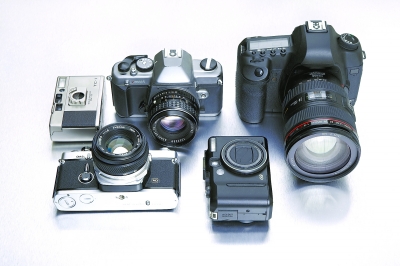
  In 1988, at the Cologne Expo, a digital camera NDS-1P jointly developed by Fuji and Toshiba attracted people’s attention. This is the first digital camera in human history, and its appearance means that the new electronic imaging technology has replaced the traditional silver halide technology, the cornerstone of Kodak’s survival — — Film, a storage medium, has been digitally melted. It is not only storage, but also digital evolution from imaging to transmission and even image modification. It is a distant thing to take photos in the early days with a whole set of cumbersome and costly equipment. The arrival of the digital age is of epoch-making significance to the history of personal selfies. Digital cameras are too friendly for selfie lovers. — There will be no more wasted film, and it can be checked and deleted through the LCD screen behind the camera immediately after shooting, which is both economical and can protect privacy. The self-timer delay function frees the photographer in the process of self-timer, and the distress of leaving reflective white spots in the middle of the photo when taking a self-timer in the mirror is gone forever. In addition, the invention of wireless remote control and cable release has expanded the range of activities of selfie takers, and they can record themselves and their surroundings. Various auxiliary self-timer functions such as anti-shake function and portrait automatic beautification function have emerged one after another, and the sales of digital cameras specially designed for self-timer are hot … … With the development of photography technology, ordinary people can easily take pictures for themselves, and selfie has finally changed from the pastime of nobles and the privilege of artists to the daily life of ordinary people.

  Mobile phone era — — Self-timer anytime, anywhere

  In 1973, on the street of new york, martin cooper, an employee of Motorola Company, successfully talked with others with a machine box the size of two bricks. This was the first mobile phone in the world, and today people call it a mobile phone. At that time, martin cooper might not have imagined how earth-shaking changes would take place in this machine 50 years later: its main functions are far more than just talking, but also surfing the Internet, paying, playing games and, of course, taking selfies.

  Today, more than 90% of online selfies come from mobile devices. For most people, the multifunctional, light and easy-to-use mobile phone is enough to take pictures instead of digital cameras, not to mention the continuous improvement of mobile phone manufacturers in mobile phone cameras. The earliest mobile phone with camera function came from Sharp J-SH04, which was released in 2000. A 110,000-pixel CCD camera was built in the back of the machine, and a convex mirror, that is, a selfie mirror, was intimately prepared next to the camera to help users see and adjust their actions in the convex mirror when taking selfies. In 2005, the prevalence of 3G network made the factory mobile phones begin to be equipped with front-facing cameras. The front camera was originally used for video calling under 3G network, but it was soon discovered by merchants that people used it to take selfies far more often than video calling. Camera, once only an accessory function, has evolved into an important indicator of mobile phones because of the popularity of self-timer. With the continuous evolution of mobile phone cameras, millions of pixels of smart phones become standard, and the imaging quality even surpasses that of ordinary cameras. Some mobile phones add a filter effect to the lens, making a "beauty mobile phone" which is the main selling point of selfie.

  The fission of network technology and the continuous upgrading of mobile phones in the 21st century have released people’s demand for taking selfies, which has made selfies grow rapidly, becoming a popular trend and even a mainstream cultural phenomenon. In 2013, the Oxford English Dictionary announced that the word of the year was "selfie", that is, in this year, 184 million selfies of social network users were spontaneously uploaded to the network. In 2014, Apple’s mobile phone was equipped with a front camera with excellent performance, which can automatically focus and fill the light in front. In this year, Time magazine in the United States called the selfie stick "one of the top 25 inventions in the world". Various beauty-shooting softwares emerge one after another, which help selfie users to skin and conceal blemishes, whiten and brighten photos, and even enlarge eyes or simulate makeup, and the operation is equally simple: choose filter lens — Taking pictures — Beautify photos — One-click upload Self-timer is like a script, which interprets the self-timer’s heart and state. When ordinary people can always adjust, pose the most beautiful posture, and even use software to modify and interpret different styles, they become artists of their own images. Every selfie is a performance that the photographer wants his image to be presented to others.

  Just as primitive people drew their rough outlines in caves and waited for their peers to admire them, feudal emperors instructed painters to paint portraits and frightened the world, and artists picked up brushes to show their artistic pursuits and spiritual world, ordinary people picked up their mobile phones to create and upload selfies, waiting for others to interpret and give feedback.

  Extended reading

  Space selfie and the era of reading pictures

  In 2012, a space selfie of Japanese astronaut Akihiko Shingo showed his selfie in a spacesuit. Although his face is completely obscured by his helmet and the picture has no caption, the reflection of the International Space Station on the astronaut’s helmet mask and the earth below the space station are enough to convey rich information — — This selfie is the best embodiment of promoting information exchange into the era of picture reading in the network era.

  Visual images are much richer than the information transmitted by words. In other words, countless selfies in the online world are also new ways of information transmission and socialization. Today, our image exists not only in the real world, but also in the online world.

Development and Reform Commission: The car guidance price is implemented by most dealers or will be recognized as a monopoly.

  BEIJING, March 23 (Xinhua) According to the official website news of the National Development and Reform Commission, the National Development and Reform Commission and relevant departments have studied and drafted the Anti-monopoly Guide on the Automobile Industry (draft for comments), which is now open to the public for comments.

  The Opinions define the concepts of automobiles and automobile manufacturers, distribution markets and after-sales markets, and clarify the prohibition and exemption of monopoly agreements.

  According to the Opinions, the suggested price, guided price or maximum price set by automobile suppliers for reselling automobiles and automobile after-sales accessories and supplies to dealers and repairers, and the suggested price, guided price or maximum price set for after-sales service working hours to dealers and repairers usually have efficiency effects. If, due to the pressure or encouragement of one party to the agreement, the suggested price, the guided price or the highest price are executed by most or all dealers, and the substantial effect is equivalent to the fixed resale price or the minimum resale price, these behaviors may be identified as fixed resale price or the minimum resale price according to the specific circumstances of each case.

  The National Development and Reform Commission said that the time for public consultation was from March 23, 2016 to April 12, 2016. Relevant units and people from all walks of life can log on to the "Anti-monopoly" column of the website of the National Development and Reform Commission (http://www.ndrc.gov.cn) Price Supervision Bureau Sub-station (http://jjs.ndrc.gov.cn/), click "Anti-monopoly Guide on the Automobile Industry (Draft for Comment)", put forward opinions and suggestions on the Guide, and send them to the National Development and Reform Commission (Price Supervision Bureau).

  At the same time, the National Development and Reform Commission announced the feedback channel, including address: No.38 Yuetan South Street, Xicheng District, Beijing, Price Supervision Bureau of the National Development and Reform Commission, zip code: 100824. E-mail: wudm@ndrc.gov.cn. (Zhongxin. com auto channel)

  Attachment: Anti-monopoly Guide on Automobile Industry (Draft for Comment)

  Price Supervision Bureau of National Development and Reform Commission

  March 23, 2016

  The State Council Anti-monopoly Committee

  Anti-monopoly guide on automobile industry

  (Draft for Comment)

  (March 2016)

  I. General principles

  Automobile industry is an important pillar industry of national economy, which plays an important role in promoting economic growth, technological innovation, employment and social development. In order to prevent and stop the monopolistic behavior of the automobile industry, reduce the cost of administrative law enforcement and operator compliance, promote scientific and effective anti-monopoly supervision, protect fair competition, safeguard consumer interests and social public interests, and promote the healthy development of the automobile industry, this guide is formulated in accordance with the Anti-monopoly Law of the People’s Republic of China (hereinafter referred to as the Anti-monopoly Law).

  (A) Concept definition

  1. Automobile refers to a vehicle driven or towed by power and having four or more wheels, which is used for carrying people and/or goods, towing people and/or goods, and for special purposes. It can be divided into two categories: passenger cars and commercial vehicles. For further classification of passenger cars and commercial vehicles, please refer to the relevant national standards (GB/T3730.1-2001 Terms and Definitions of Types of Cars and Trailers).

  2. New energy vehicles refer to vehicles that use new power systems and are driven entirely or mainly by new energy sources, mainly including pure electric vehicles, plug-in hybrid vehicles and fuel cell vehicles.

  3. Second-hand cars refer to cars that have been traded and transferred ownership from the completion of registration procedures to the national compulsory scrapping standards.

  4. Automobile suppliers refer to operators who provide automobiles, after-sales accessories and supplies, including:

  (1) automobile manufacturers;

  (2) The general automobile dealer established or authorized by the automobile manufacturer;

  (3) Automobile importers engaged in automobile wholesale business.

  5. Spare parts suppliers refer to operators who produce or provide automobile parts for initial assembly and after-sales parts.

  6. Automobile dealers refer to operators who engage in automobile distribution and service independently of automobile suppliers. In practice, car dealers can assume the role of car repairers at the same time, but car sales and after-sales service can also be separated from each other.

  7. Automobile repairers refer to operators who provide automobile repair and maintenance services.

  8. End users, as far as automobiles are concerned, refer to the owners of automobiles (subject to the motor vehicle registration certificate) and other persons who have the legal right to use automobiles (such as automobile lessees). As far as after-sales automobile accessories and supplies are concerned, it includes: (1) the owner of the motor vehicle who purchased these products and other people who have the legal right to use the automobile; (2) Repairers who use these products for repair rather than resale.

  9. Auto parts are classified according to the standards of use, brand, supply channel and quality, including initial parts, double standard parts, after-sales parts, original parts and homogeneous parts.

  (1) Initial assembly parts refer to the parts used to produce and assemble new cars.

  (2) Double-label parts refer to the initial assembly parts and after-sales parts marked with the trademarks, logos and part codes of the automobile manufacturer and the parts manufacturer.

  (3) After-sale accessories refer to products installed in automobiles to replace the parts initially installed in automobiles, including lubricants necessary for automobiles, but excluding fuel.

  (4) Original spare parts refer to after-sales spare parts provided by automobile suppliers or third parties designated by automobile suppliers, which are manufactured according to the specifications and product standards of automobile parts initially installed by using automobile suppliers’ brands or brands designated by automobile suppliers.

  (5) Homogeneous parts, also known as parts with equivalent quality, refer to after-sales parts that have obtained relevant certification and the quality is not lower than that of automobile parts initially installed, but do not include original parts.

  10. Maintenance technical information refers to the technical information necessary for automobile diagnosis, testing and maintenance in order to maintain or restore the technical condition and working ability of the automobile when it leaves the factory, prolong the service life of the automobile and ensure that the automobile meets the requirements of safe and environmentally friendly use.

  (2) Definition of relevant markets

  The automobile industry has a long industrial chain and various business types in the upper, middle and lower reaches. The definition of relevant commodity markets and regional markets follows the general principles and methods defined in the Anti-monopoly Law and the Guide of the State Council Anti-monopoly Committee on Defining Relevant Markets, and at the same time, the characteristics of the automobile industry and the specific circumstances of individual cases are considered.

  The basic basis for defining the relevant market of the automobile industry is substitution analysis. In a case, the demand substitution is firstly investigated, and then the supply substitution is investigated. For example, automobile distribution consists of two parts: wholesale and retail. Wholesale is for automobile suppliers and retail is for end users. According to the specific circumstances of the case, it may be necessary to define automobile wholesale and retail as subdivided related markets respectively; The automobile distribution market can be further subdivided from the perspective of supply substitution and demand substitution.

  The automobile after-sales market can be further subdivided into after-sales parts distribution market and after-sales maintenance market. In the automobile after-sales market, the after-sales maintenance service of a specific brand and model requires the use of after-sales accessories suitable for the brand and model, based on the maintenance technical information of the specific brand and model. From the perspective of demand substitution and supply substitution, the compatibility and locking effect of automobile aftermarket exist objectively, so automobile brand has become an important related factor to be considered when defining automobile aftermarket.

  Second, the monopoly agreement

  (1) Prohibition and exemption of monopoly agreements

  1. Basic provisions of the Anti-Monopoly Law

  Article 13 of the Anti-Monopoly Law prohibits horizontal monopoly agreements, article 14 prohibits vertical monopoly agreements, and article 15 stipulates the exemption situations and conditions of monopoly agreements. According to Article 15 of the Anti-Monopoly Law, if an operator claims that Article 13 or Article 14 of the Anti-Monopoly Law does not apply to his agreement, he must first prove that his agreement belongs to one of the circumstances listed in Article 15. Secondly, in addition to "to protect the legitimate interests in foreign trade and foreign economic cooperation" and "other circumstances stipulated by law and the State Council", the operator should also prove that his agreement will not seriously restrict the competition in the relevant market and enable consumers to share the benefits arising therefrom.

  In order to prove that its agreement will not seriously restrict the competition in the relevant market, the operator can evaluate its market power in the relevant market. To evaluate the market power of operators, we can refer to the factors listed in Article 18 of the Anti-Monopoly Law. Evaluating whether an agreement can enable consumers to share the resulting benefits can be investigated from the perspectives of price reduction, quality improvement, technological innovation, technological upgrading, and more choices of products and services.

  The specific procedures for operators to apply Article 15 of the Anti-Monopoly Law to claim exemption from monopoly agreements shall be stipulated separately by the relevant guidelines of the State Council Anti-Monopoly Committee.

  2. Presumptive immunity

  In order to reduce the cost of administrative law enforcement and the compliance cost of operators, this guide lists some situations of geographical restrictions and customer restrictions set by operators who do not have significant market power, and it can be inferred that the provisions of Article 15 of the Anti-Monopoly Law are applicable. Law enforcement practice and theoretical research have proved that these situations can usually improve the quality of distribution services, improve distribution efficiency, enhance the operating efficiency and competitiveness of small and medium-sized dealers, generally do not seriously restrict the competition in relevant markets, and enable consumers to share the benefits arising therefrom, thus meeting the conditions stipulated in Article 15 of the Anti-Monopoly Law.

  It is not necessarily reasonable, scientific and operable to set a fixed market share standard to evaluate whether operators have significant market power. However, taking the competition evaluation of vertical agreements as an example, law enforcement practice and theoretical research show that it accounts for 25%— Operators with a market share below 30% may be considered as having no significant market power.

  However, according to the specific circumstances of a case, if there is evidence to prove that the operator’s behavior does not conform to the provisions of Article 15 of the Anti-Monopoly Law, the anti-monopoly law enforcement agency can still apply Article 14 of the Anti-Monopoly Law to the relevant behavior.

  3. Case exemption

  In addition to the situations listed in this Guide where Article 15 of the Anti-Monopoly Law can be presumed to be applicable, if an operator claims that Article 15 of the Anti-Monopoly Law can be applied to his agreement, he needs to prove that his agreement meets the statutory conditions of Article 15 of the Anti-Monopoly Law according to the specific circumstances of each case, and judge whether his agreement can be exempted from each case.

  (2) Horizontal monopoly agreement of automobile industry

  1. Some types of horizontal agreements, such as research and development agreements, specialization agreements, technical standardization agreements, joint production agreements, joint procurement agreements, etc., can usually improve efficiency and promote competition, which is conducive to increasing consumer welfare. For example, horizontal cooperation agreements in the R&D and production of new energy vehicles can enable competitors to share investment risks, improve efficiency and promote social public interests. Therefore, the automobile business operators who have reached the aforementioned horizontal agreements that can improve efficiency and promote competition can prove that the provisions of Article 13 of the Anti-Monopoly Law are not applicable to their agreements according to Article 15 of the Anti-Monopoly Law.

  2. Regarding the competition analysis of horizontal monopoly agreements, there is no significant difference between the automobile industry and other industries, so this guide will not further refine it. The anti-monopoly regulation of horizontal monopoly agreements in the automobile industry shall be handled by the anti-monopoly law enforcement agencies in the State Council according to the Anti-monopoly Law, the Provisions on Anti-price Monopoly, and the Provisions on Prohibition of Monopoly Agreements by the Administrative Law Enforcement Agencies for Industry and Commerce.

  (3) Vertical monopoly agreement of automobile industry

  1. The form of the agreement and the cumulative effect of similar agreements.

  In practice, vertical agreements can be expressed as direct restrictions, such as the resale price of dealers stipulated in the contract terms; It can also be manifested as indirect restrictions, such as fixing the profit rate and discount level of dealers, canceling rebates, refusing to supply or canceling the authorization agreement in advance for dealers who do not comply with the suggested price through price monitoring.

  In China automobile market, vertical agreements are mainly embodied in dealer agreements, and may also be reached through commercial policies, circulars, information and notices. Anti-monopoly law pays attention to the effect of behavior rather than the form, and the key to evaluate monopoly behavior is the actual effect of restricting competition. According to its competitive effect, unilateral acts in the form of business policies may be recognized as constituting a vertical monopoly agreement regulated by the Anti-Monopoly Law.

  Usually, the implementation of vertical agreements by a single operator will limit intra-brand competition and harm the interests of consumers. In particular, when most or even all operators in the relevant market adopt similar vertical agreements, and all kinds of vertical restrictions in the agreements form a network, covering the relevant markets in an all-round way, the binding force of inter-brand competition will be obviously weakened. The cumulative effect caused by similar vertical agreements can significantly limit the competition in related markets, make related products and services priced above the competitive level, and ultimately lead to the loss of consumer welfare.

  2. Fixed resale price and limited minimum resale price

  Article 14 of the Anti-Monopoly Law explicitly prohibits the fixed resale price and the limited minimum resale price with obvious competitive effect. The negative effects of vertical price restrictions are mainly manifested in maintaining high prices, promoting horizontal and vertical collusion, weakening inter-brand competition and intra-brand competition, and excluding competitors.

  Of course, according to the principle of case analysis, if the operator can prove that these price restrictions will not seriously restrict the competition in the relevant market and enable consumers to share the benefits arising therefrom, the operator can claim case exemption for the fixed resale price and the limited minimum resale price according to Article 15 of the Anti-Monopoly Law.

  In practice, the common situations in which automobile industry operators advocate the vertical price restriction of case exemption based on Article 15 of the Anti-Monopoly Law include:

  (1) Fixed resale price and limited minimum resale price during the promotion period of new energy vehicles.

  In order to save energy, protect the environment and avoid "service hitchhiking", during the promotion period of new energy vehicles, it is necessary to fix the resale price and limit the minimum resale price in a short period (for example, within 9 months from the date when the automobile supplier issues the first batch invoice for a specific vehicle) to encourage dealers to promote new energy products, increase sales efforts and expand the market demand for new products, thus promoting the successful listing of new products and giving consumers more choices.

  (2) resale price limit in the sales of dealers who only assume the role of middlemen.

  Dealer sales, which only assume the role of middleman, refers to the sales of car suppliers and specific third parties or specific end customers (such as employees of car suppliers and dealers, major customers, advertising and sponsors, etc.) through direct negotiation, and only through authorized dealers to complete the sales of car delivery, collection and invoicing. In these transactions, authorized dealers only play the role of middlemen to help complete the transactions, which is different from full-fledged dealers.

  (3) resale price restrictions in government procurement

  In practice, government procurement projects usually require automobile suppliers participating in joint bid to provide consistent or fixed retail price quotations after coordination with their dealers. For nationwide procurement projects, government procurement departments sometimes directly contact automobile suppliers, who have no direct sales or retail licenses and need to reach an agreement with specific dealers on retail prices in order to realize their quotations for government procurement. Similar to dealer sales that only assume the role of middleman, dealers in government procurement are different from dealers in full sense if they only assist in completing the transaction.

  (4) the resale price limit in e-commerce sales of automobile suppliers.

  The pricing behavior in e-commerce sales is governed by the Anti-Monopoly Law, the Anti-Price Monopoly Provisions and other laws and regulations. However, in practice, automobile suppliers sell cars at a uniform price for a certain period of time through e-commerce platforms, and directly reach a deal with unspecified end users, and only complete the sales of delivery, collection, invoicing and other trading links through dealers. In these e-commerce transactions, dealers only assume the role of middlemen to help complete the transaction, which is different from the dealers in full sense.

  3. Suggested price, guided price and limited maximum price

  It is usually efficient for automobile suppliers to set suggested prices, guided prices or maximum prices for reselling automobiles and automobile after-sales accessories and supplies to dealers and repairers, and to set suggested prices, guided prices or maximum prices for after-sales service working hours to dealers and repairers, and these behaviors generally do not exclude or restrict competition.

  However, if, due to the pressure or encouragement of one party to the agreement, the suggested price, the guided price or the highest price are executed by most or all dealers, and the substantial effect is equivalent to the fixed resale price or the minimum resale price, these behaviors may be identified as fixed resale price or the minimum resale price according to the specific circumstances of each case.

  4. Geographical restrictions and customer restrictions

  Geographical restriction means that the supplier promises to supply one or several dealers in a specific distribution area, and the dealers promise not to sell in other distribution areas. Customer restriction means that the supplier restricts the distributor to sell the goods only to specific customers or not.

  Geographical restrictions and customer restrictions may weaken intra-brand competition, divide the market and encourage price discrimination. Effective geographical restrictions and customer restrictions make it difficult for other distributors to obtain supplies, hinder the promotion of more efficient new distribution models, and keep the prices of goods and services at a high level. However, sometimes geographical restrictions and customer restrictions can also improve distribution efficiency. For example, when dealers need to make specific investments to protect and establish brand image, geographical restrictions can produce significant efficiency.

  (1) The geographical restrictions and customer restrictions set by automobile operators who do not have significant market power are efficient and justified, and can usually meet the provisions of Article 15 of the Anti-Monopoly Law, which can be applied. The foregoing situations mainly include:

  It is agreed that the distributor will only conduct distribution activities in its business premises, but it will not restrict the passive sales of the distributor or cross-supply between distributors.

  Passive sales refer to the delivery of goods or services to individual customers at their request without active marketing. For example, the behavior of consumers in a place to buy a car in b place is the passive sales of dealers.

  Compared with traditional sales methods, e-commerce sales are aimed at a wider and more diverse customer base. If a customer browses the dealer’s website or the third party’s website and contacts the dealer, and the contact leads to a sales transaction, the sales will be regarded as passive sales. For the information sent by the distributor to an unspecified audience through its own or third-party website, if the customer actively chooses to accept it (for example, subscribing to the promotion information of the distributor online) and actively contacts the distributor to generate a sales transaction, the transaction will be regarded as the passive sales of the distributor. However, if the distributor sends out advertisements or promotional information to a specific audience, such acts will constitute active sales.

  Restrict dealers from actively selling exclusive territory or exclusive customers reserved by automobile suppliers for another dealer.

  Restrict wholesalers from selling directly to end users.

  In order to prevent accessories from being used by customers to produce the same products as automobile suppliers, dealers are restricted from selling accessories to such customers.

  It is not necessarily reasonable, scientific and operable to set a fixed market share standard for evaluating the market power of operators. However, taking the competition evaluation of vertical agreements as an example, law enforcement practice and theoretical research show that operators who occupy less than 25%-30% of the relevant market share may be considered as having no significant market power.

  (2) The following four types of geographical restrictions and customer restrictions can usually severely restrict competition, lead to high prices and reduce consumers’ choices, so the provisions of Article 15 of the Anti-Monopoly Law cannot be directly applied. Automobile business operators who engage in the following acts may claim individual exemption if they can prove that their acts conform to the provisions of Article 15 of the Anti-Monopoly Law.

  Restrict the passive sales of dealers.

  Restrict cross-supply between dealers.

  Restrict dealers and repairers from selling accessories needed for automobile maintenance services to end users.

  Except in the case of OEM agreement, automobile manufacturers reach an agreement with suppliers of accessories, repair tools, testing instruments or other equipment to restrict such suppliers from selling relevant accessories, repair tools, testing instruments or other equipment to dealers, repairers or end users. For the determination of the OEM agreement, please refer to Appendix (1) of this Guide.

  5. Indirect vertical restrictions are imposed on after-sales maintenance services and parts circulation through warranty clauses.

  For the maintenance work and replacement parts within the warranty scope, the automobile supplier usually requires the automobile end user to use the original parts in the authorized maintenance network to complete the maintenance work. However, by indirectly imposing unreasonable vertical restrictions on after-sales service and after-sales parts circulation through warranty clauses, independent repairers can be excluded, parts supply and distribution channels can be reduced, and finally the price of automobile maintenance services can be increased.

  The unreasonable vertical restrictions mentioned above include but are not limited to:

  (1) As a condition for the automobile supplier to fulfill the warranty responsibility, the automobile supplier shall hand over all the maintenance work that is not covered by the warranty by the automobile end user to the authorized maintenance network;

  (2) For after-sales parts that are not covered by the warranty, the automobile supplier requires to use the original parts as a condition for fulfilling the warranty responsibility;

  (3) Automobile suppliers have no justifiable reason to restrict their maintenance network to provide after-sales maintenance services for parallel imported cars.

  6. Other vertical restrictions on the ability of dealers and repairers to sell and serve.

  The following vertical restrictions imposed by automobile suppliers through agreements and business policies may improperly restrict the sales and service capabilities of dealers and repairers. If they lead to significant elimination and restriction of competition, increase the price of automobile distribution and maintenance channels and harm the interests of consumers, the relevant agreements and business policies may be recognized as vertical monopoly agreements regulated by the Anti-Monopoly Law.

  (1) The automobile supplier forces the dealers or repairers to tie up the cars, after-sales parts, fine products, consumables, repair tools, testing instruments, etc. that they have not ordered.

  Tying by suppliers to distributors is a vertical restriction, which may lead to exclusive purchase obligation of tying products, thus excluding competition in tying products market.

  (2) Automobile suppliers force dealers or repairers to accept unreasonable sales targets, inventory varieties and quantities of automobiles or after-sales parts.

  Suppliers and distributors can agree on the sales target, inventory variety and quantity of contract products through equal consultation. However, suppliers unilaterally set and force dealers to accept unreasonable sales targets, inventory varieties and quantities, which may lead dealers to assume exclusive purchase obligations of contract products, thus excluding competition in relevant markets.

  (3) The automobile supplier compels the dealer to bear the expenses of advertising, auto show and other publicity in the name of the automobile supplier, or compels the dealer to carry out advertising at his own expense in a specific way and in a specific media.

  Automobile suppliers usually agree with dealers to participate in joint promotion and marketing activities and ask dealers to share reasonable expenses. In addition, in order to ensure the overall effect of brand promotion, automobile suppliers usually set reasonable quality standards for dealers to select media. However, forcing dealers to bear the promotion expenses in the name of automobile suppliers, or restricting the specific ways and media for dealers to carry out advertising, may unduly limit dealers’ ability to decide their own promotion and marketing activities, indirectly increase the cost of distribution and after-sales channels, and ultimately increase the burden on consumers.

  (4) Automobile suppliers restrict dealers and repairers to use only the services of specific paid design units or construction units, or restrict dealers and repairers to use only specific brands, suppliers and supply channels for building materials, general equipment, information management systems and office facilities.

  In order to ensure the brand image, automobile suppliers usually stipulate or stipulate quality standards for the design, decoration and office facilities of dealers and repairers’ business premises through agreements or business policies. In addition, based on the consideration of intellectual property protection, automobile suppliers usually specify the procurement channels of their automobile brand logos. However, it is usually not necessary to restrict the design of business premises and office facilities to specific third-party brands, suppliers and supply channels to ensure the brand image of automobiles. Such restrictions may unduly restrict the competition in relevant markets and indirectly increase the cost of distribution and after-sales channels.

  (5) When the automobile supplier refuses to supply or terminates the distribution agreement in advance, it shall clearly list the reasons.

  In order to prevent automobile suppliers from refusing to supply to dealers or terminating the distribution agreement in advance without justifiable reasons, such as refusing to implement the minimum resale price set by automobile suppliers, purchasing original parts and homogeneous parts from channels other than automobile suppliers for after-sales maintenance, etc., the notice of automobile suppliers refusing to supply or terminating the distribution agreement in advance shall clearly list the reasons.

  Iii. Abuse of dominant market position

  Article 17 of the Anti-Monopoly Law prohibits the abuse of market dominance, including unfair high prices and low prices, as well as selling goods below the cost price without justifiable reasons, refusing to trade, restricting trading, tying and attaching other unreasonable trading conditions, and differential treatment.

  At present, the competition in China’s new car sales market is fierce, but the lock-in effect and compatibility problems in the after-sales market may limit and weaken the effective competition in the after-sales market and harm the interests of consumers. In defining the automobile aftermarket in a case, automobile brand is an important related factor to be considered. According to the definition of market dominance in Article 17 of the Anti-Monopoly Law and the factors that should be based on in Article 18 of the Anti-Monopoly Law, automobile suppliers who do not have a dominant position in the new car sales market may be identified as having a dominant position in the after-sales market of their brand cars.

  (A) after-sales parts production

  Except for the parts produced according to the OEM agreement, the automobile manufacturers that have a dominant position in the after-sales market of their brand cars should not restrict the production of "double-labeled parts" for the accessory manufacturers that initially installed automobiles without justifiable reasons. That is to say, automobile manufacturers should not reach an agreement with the parts manufacturers who provide them with initial parts, and prohibit the latter from affixing their own trademarks, logos and part codes on the initial parts of automobiles. Double standard parts aim to improve the ability of consumers and repairers to identify homogeneous parts and promote effective competition in the automotive aftermarket.

  For the determination of the OEM agreement, please refer to Appendix (1) of this Guide.

  (2) Supply and circulation of after-sales parts

  Automobile manufacturers that have a dominant position in the after-sales market of their brand cars should not restrict the supply and circulation of after-sales parts without justifiable reasons, including:

  1. Restrict dealers and repairers from purchasing after-sales parts, that is, restrict dealers and repairers from purchasing homogeneous parts or original parts (including parallel imported parts) from other channels.

  Suppliers who do not have a dominant market position set exclusive purchase obligations for their distribution channels for a certain period, which can improve the quality standards of distribution networks, help to establish and maintain brand image, improve the attractiveness of brands to end consumers and increase sales. However, if there are obvious barriers to entry or expansion in the relevant market, the exclusive procurement obligation may block competitive suppliers, weaken the incentive mechanism for innovation, raise the price of goods in distribution channels and limit consumers’ choices.

  In practice, automobile suppliers, which have a dominant position in the after-sales market of their brand cars, impose unreasonable sales quantity targets, inventory varieties and quantities on dealers, which can usually substantially restrict dealers and repairers from purchasing accessories.

  However, automobile suppliers have the right to require their authorized system members to use only original and homogeneous parts, and to require their authorized system members to ensure consumers’ right to know and the traceability of parts. Automobile suppliers also have the right to claim that members of the authorization system can use remanufactured parts and recycled parts in maintenance work only when consumers know and clearly choose and ensure the traceability of accessories. The above situation does not affect the civil liability of authorized dealers, authorized repairers and parts suppliers.

  2. Restrict accessories suppliers, distributors and repairers from exporting after-sales accessories, including:

  (1) Except for the parts produced according to the OEM agreement, all parts are required to be "returned to the factory", that is, parts suppliers are restricted from supplying parts with their own brands to the after-sales channels;

  (2) Restrict the cross-supply of after-sales parts between dealers, between repairers and between dealers and repairers;

  (3) Restrict dealers and repairers from selling accessories needed for automobile maintenance services to end users.

  (3) Availability of maintenance technical information, test instruments and maintenance tools

  Automobile after-sales maintenance usually needs to be completed by qualified technicians based on the technical information of specific brands of automobiles. Automobile suppliers are usually the only source of all maintenance technical information of their brand cars. If the repairer can’t get the necessary technical information for testing, repairing and replacing automobile parts, the maintenance service it provides may lead to dangerous driving, high emissions and air pollution. At the same time, the market position of repairers is squeezed, which leads to the reduction of maintenance channels, the increase of automobile maintenance prices and the limited choice of consumers.

  Effective competition in the automobile after-sales market needs to ensure the availability of after-sales maintenance technical information, as well as the availability of test instruments and maintenance tools. Therefore, automobile suppliers that have a dominant position in the aftermarket of their brand automobiles should not restrict the availability of maintenance technical information, test instruments and maintenance tools without justifiable reasons, including:

  1. Restrict the rights and channels for the repairer to obtain the technical information of automobile maintenance of a specific brand;

  2. To reach an agreement with suppliers of repair tools, testing instruments or other equipment to restrict such suppliers from selling relevant repair tools, testing instruments or other equipment to dealers and repairers.

  Fourth, the concentration of operators

  The Anti-Monopoly Law prohibits business operators from implementing concentration that has or may have the effect of eliminating or restricting competition. There is no significant difference between the automobile industry and other industries in the competitive analysis of operator concentration.

  The anti-monopoly review on the concentration of automobile operators shall be handled by the anti-monopoly law enforcement agencies in the State Council according to the Anti-monopoly Law, the Interim Provisions on Evaluating the Impact of Concentration of Operators, the Provisions on Additional Restrictive Conditions for Concentration of Operators (for Trial Implementation) and other laws and regulations.

  In the anti-monopoly review of automobile operators, this guide explains and guides the automobile monopoly agreement and the abuse of market dominance, which is of reference significance for the anti-monopoly review of automobile operators.

  V. Abuse of administrative power to exclude or restrict competition

  The Anti-Monopoly Law prohibits administrative organs and organizations authorized by laws and regulations to manage public affairs from abusing administrative power to exclude or restrict competition.

  Abuse of administrative power to exclude or restrict competition in the automobile market shall be dealt with by the anti-monopoly law enforcement agencies in the State Council according to the Anti-monopoly Law, the Provisions on Anti-price Monopoly, and the Provisions of the Administration for Industry and Commerce on Stopping Abuse of Administrative Power to Exclude and Restrict Competition.

  Abuse of administrative power in automobile trading excludes and restricts competitive behavior, which hinders the healthy development of automobile market and harms consumers’ interests. For example, the abuse of administrative rights in second-hand car trading excludes and restricts competition, which is not conducive to green recycling consumption and the sustainable development of the automobile market. It also limits the rights and interests of car owners to dispose of property rights, prolongs the cycle of changing cars for consumers, and indirectly affects the new car sales market.

  Therefore, administrative organs and organizations authorized by laws and regulations to manage automobile circulation affairs should not violate the provisions of Chapter V of the Anti-Monopoly Law to exclude or restrict competition, including but not limited to:

  (a) to formulate regulations that restrict the access to the automobile market and the free circulation of automobiles;

  (2) Restricting or disguised restricting operators from operating automobile business by setting business opening conditions or qualification requirements with the effect of excluding and restricting competition;

  (3) Restricting or restricting in disguised form the purchase, lease and use of the automobile trading system, facilities and business premises provided by its designated operators;

  (four) the behavior of restricting the movement of used cars, that is, the second-hand cars must be traded at the place where the vehicles are registered;

  (five) to restrict the second-hand car trading, the invoice must be issued by the second-hand car trading market.

  VI. Supplementary Provisions

  (A) the identification of the OEM agreement

  OEM agreement, also known as entrustment processing agreement, agency processing contract, contracting contract and OEM processing contract in practice, means that the entrusting party provides the necessary technology and equipment for the entrusted party, and the entrusted party produces products, provides services or completes the work for the entrusting party.

  If the parts manufacturer uses the intellectual property rights of the automobile manufacturer to process the automobile parts according to the requirements of the automobile manufacturer, the relationship between the automobile manufacturer and the parts manufacturer is entrusted processing, and an OEM agreement is reached. There are significant differences between OEM agreement and parts supply agreement between parts manufacturers and automobile manufacturers who use their own intellectual property rights.

  Whether an agreement constitutes a real OEM agreement needs to be evaluated on a case-by-case basis, and it can be determined after evaluating the substantive content of the agreement, rather than directly according to the form of the agreement. In short, if the technology and equipment provided by the automobile manufacturer (the entrusting party) are necessary for the parts manufacturer (the entrusted party) to produce contract products or provide contract services under reasonable conditions according to the requirements of the automobile manufacturer, the parts manufacturer’s identity is "OEM" and it is not regarded as an independent parts supplier in the market.

  However, when an automobile manufacturer provides tools, intellectual property rights or know-how to an accessory manufacturer, if the accessory manufacturer already has such tools, intellectual property rights or know-how that can be used independently or can obtain such tools, intellectual property rights or know-how on reasonable terms, the technology and equipment of the automobile manufacturer are not necessary for the accessory manufacturer to perform the agreement. For example, if the automobile manufacturer only provides the general descriptive information of the contract products, but restricts the accessory manufacturer from supplying accessories to the aftermarket under its own brand name, the automobile manufacturer essentially deprives the accessory manufacturer of the possibility of expanding business in the areas related to the agreement, and excludes and restricts the competition in the relevant markets, which may lead to high prices and reduce consumers’ choices.

  Specific factors that can be considered in evaluating "technology or equipment necessary for producing contract products or providing contract services" include but are not limited to:

  1. Intellectual property rights owned or disposed of by the entrusting party, including: invention patents, utility models, copyrighted designs, registered designs or other intellectual property rights;

  2. Proprietary technologies such as production processes owned or disposed of by the entrusting party;

  3. Research reports, plans and other documents prepared by the entrusting party to match the information provided by it.

  (two) the entry into force, update and supplement of the guide

  This guide will be implemented on * * *. The Anti-monopoly Committee of the State Council will continue to investigate and evaluate the overall competition situation in China’s automobile market, and update and supplement this guide according to the development trend of China’s automobile industry.


The overall design of the handball hall of Hangzhou Asian Games is full of science and technology.

CCTV News:The handball competition time of Hangzhou Asian Games is September 24th — On October 5, up to now, 22 male and female teams from 15 countries (regions) have participated in the competition, which will produce 2 gold medals. The handball hall of Hangzhou Asian Games, located in Xiaoshan Campus of Zhejiang Normal University, is one of the 12 newly-built venues of this Asian Games. Next, let’s go to the hall with CCTV reporters from the general station.

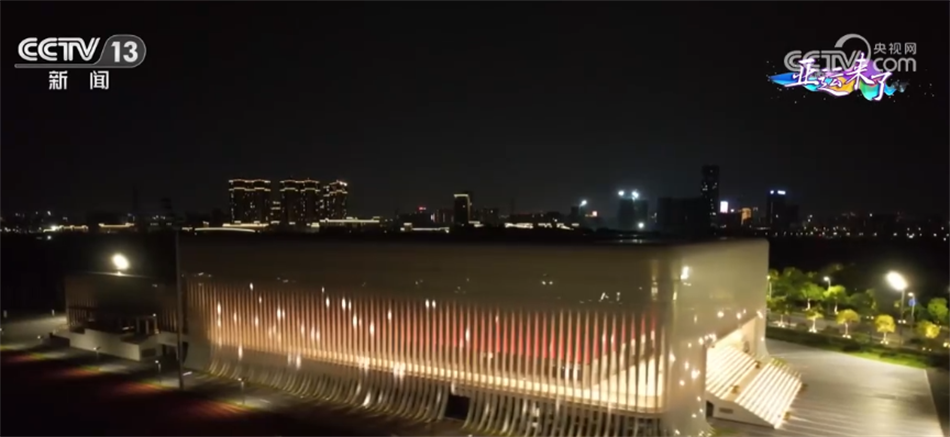
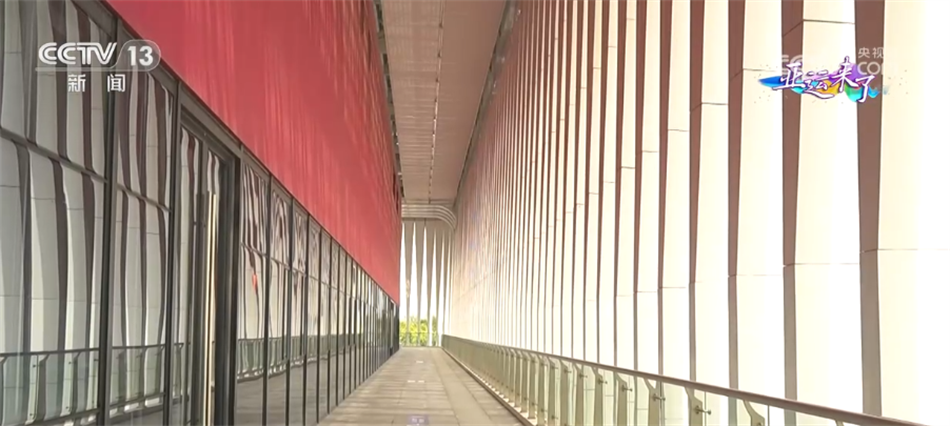
The handball hall of Hangzhou Asian Games consists of two parts: the warm-up hall and the competition hall. The appearance of the whole building is simple but not simple. Outside the main hall and the sub-hall, there are ribbons of silk, which slowly fall from the top of the hall and extend to the ground. These ribbons are called "water curtains", with a total of 308 strands. Each strand of "water curtains" is equipped with lights near the ground, so that at night, the handball hall can show a specific pattern.

CCTV reporter Ren Meimei:Now we come to the outdoor second-floor platform of the handball hall and enter the interior of the "water curtain". These hanging "water curtains" are actually not only decorations, but also have practical functions. They can play the role of heat insulation just like shutters, and can also reduce glare and improve indoor visual comfort.

Handball originated in Denmark, which is a ball game developed by combining the characteristics of basketball and football, with "chasing" and "fighting" as its main features.

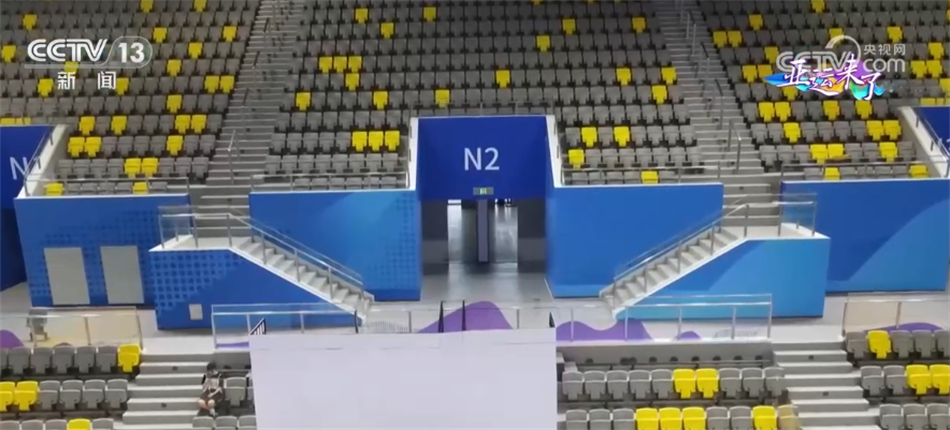
Handball requires athletes to run, jump and throw on the field, with frequent physical contact and fierce antagonism. For the audience in the handball hall of the Hangzhou Asian Games, the fierce competition here is not only "overwhelming", but also "no dead ends" for everyone to watch the game in the handball hall.

There are 2,244 seats in the court, each seat can let the audience see the position 1 meter above the most sideline of the handball court, and the athletes’ every move can be seen at a glance. This effect comes from the asymmetric two-sided stands built by the design team after a lot of data research in the early stage. In addition, in order to achieve the goal of "no dead angle", the whole venue also adopted the beam string structure design, and there was no pillar in the 3,000-square-meter hall.

In addition, the use of the venue after the game was fully considered at the beginning of the construction. The handball venue is actually a wooden floor basketball court made according to FIBA standards. During the Asian Games in Hangzhou, a special PVC floor was laid on the field to become a handball competition venue. After the Asian Games, the main hall can be transformed into venues for basketball, volleyball, badminton, table tennis and judo, and the auxiliary hall can also be equipped with various competition equipment and fitness equipment to meet the different needs of teachers and students in the whole school.

"2022 bilibili automobile ecological report": the amount of automobile video playback increased by 116% year-on-year.

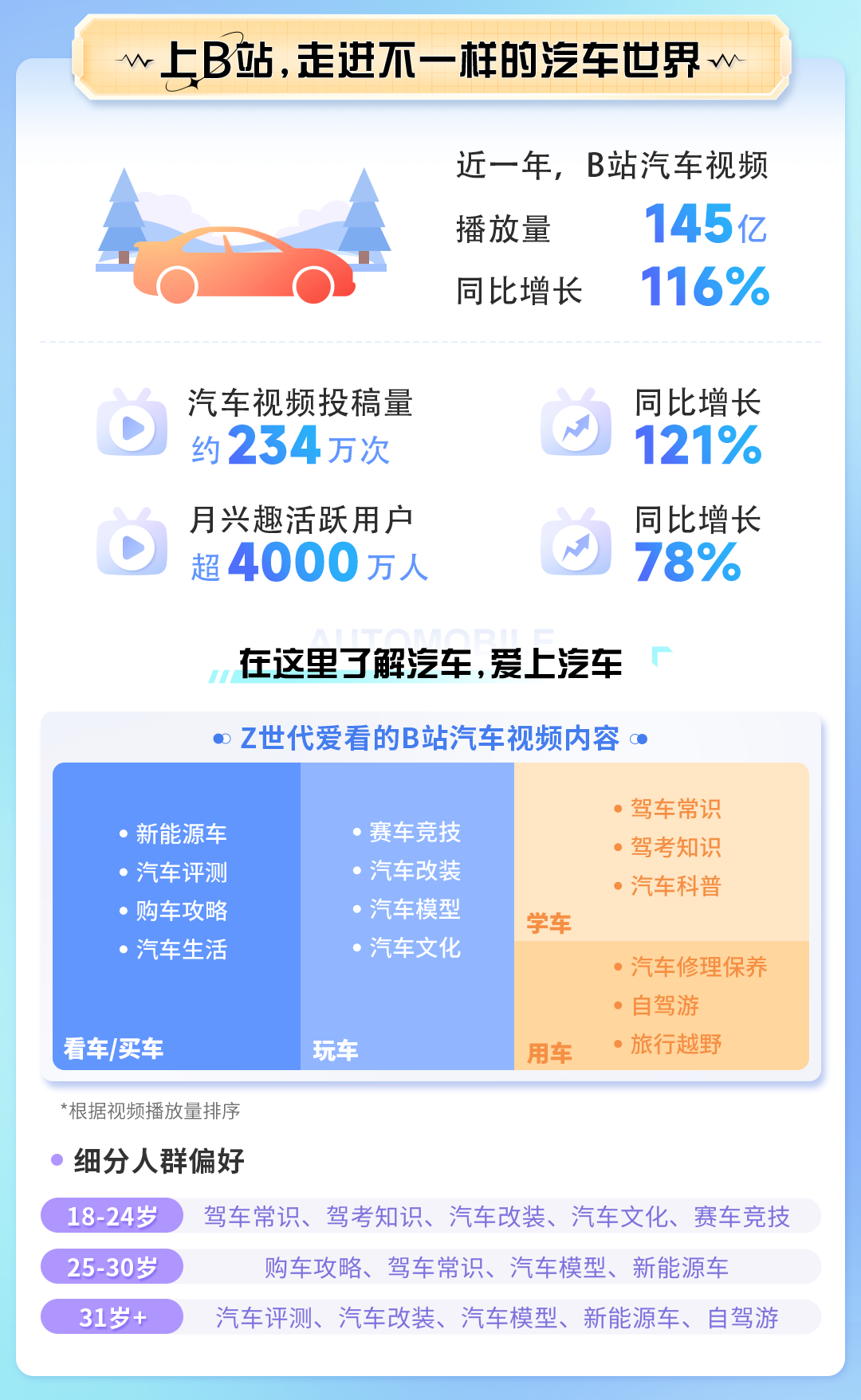
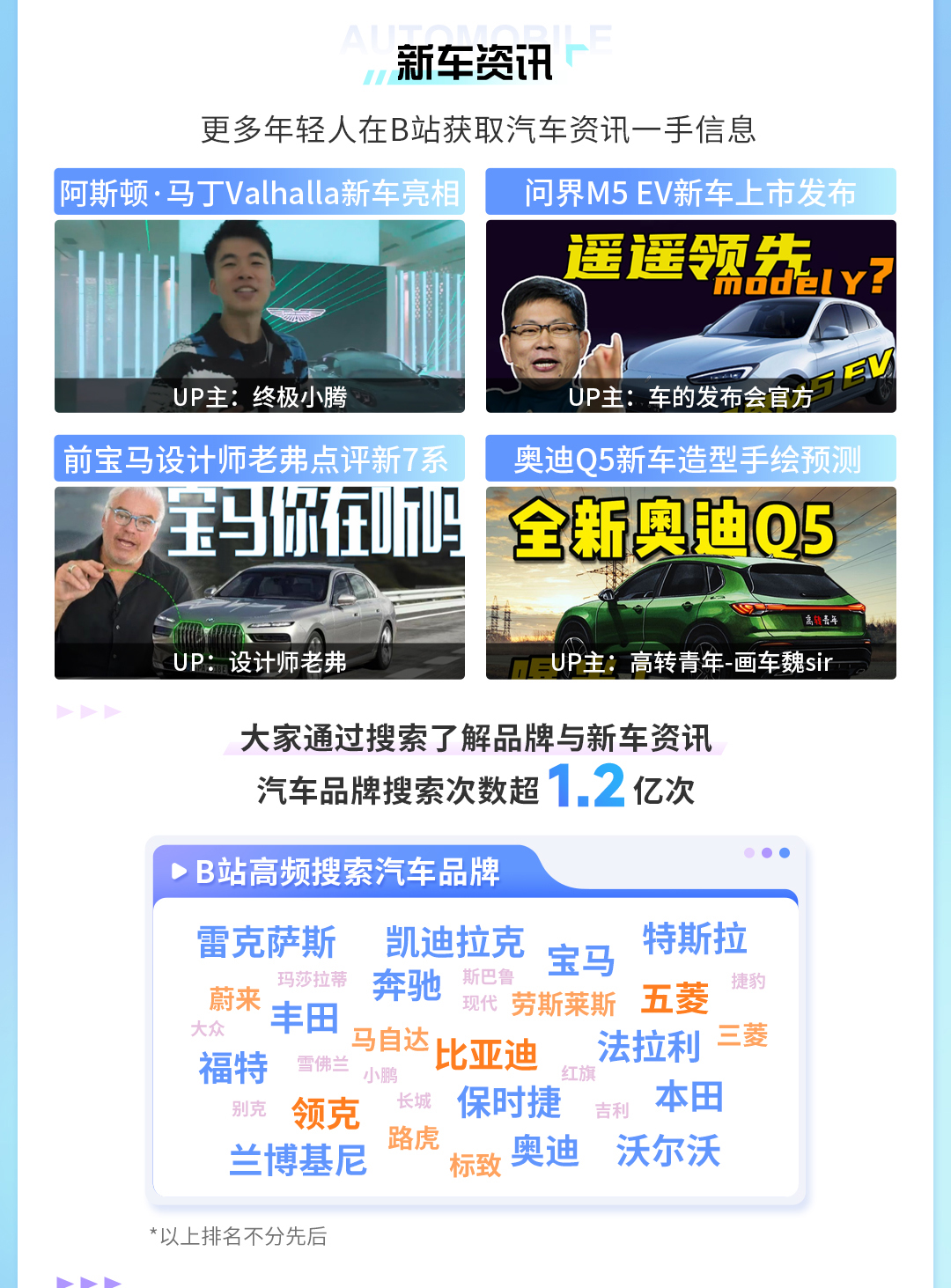
On November 15th, bilibili released "2022 bilibili Automobile Ecological Report" (hereinafter referred to as "Report"). In the past year, the number of car videos played in bilibili reached 14.5 billion, up 116% year-on-year, with over 40 million monthly active users.

From learning to buying a car, a multi-cultural community with car interests.

The report shows that at present, bilibili has gathered practical strategies from driving test study, new car information, car purchase evaluation, car sharing and other aspects, and has become a multicultural community with diverse car interests for young people. In the past year, 10.84 million people have watched driving test videos many times in bilibili, and the number of car purchase evaluation videos has exceeded 1.7 billion times. More and more people share their first cars in bilibili, and the number of contributions to the vlog for car lifting has increased by 156%. In addition, new energy vehicles are also widely concerned in bilibili, with the number of searches increasing by 199% year-on-year.

In bilibili, many users get to know the brand and new car information through search, and the number of car brand searches has exceeded 120 million times in the past year. More and more automobile brands are active in bilibili. At present, 93 automobile brands, including BMW, Mercedes-Benz, Link and Wuling, have settled in. They have produced characteristic content that conforms to the tonality of users in bilibili, showing the younger side of the brand.

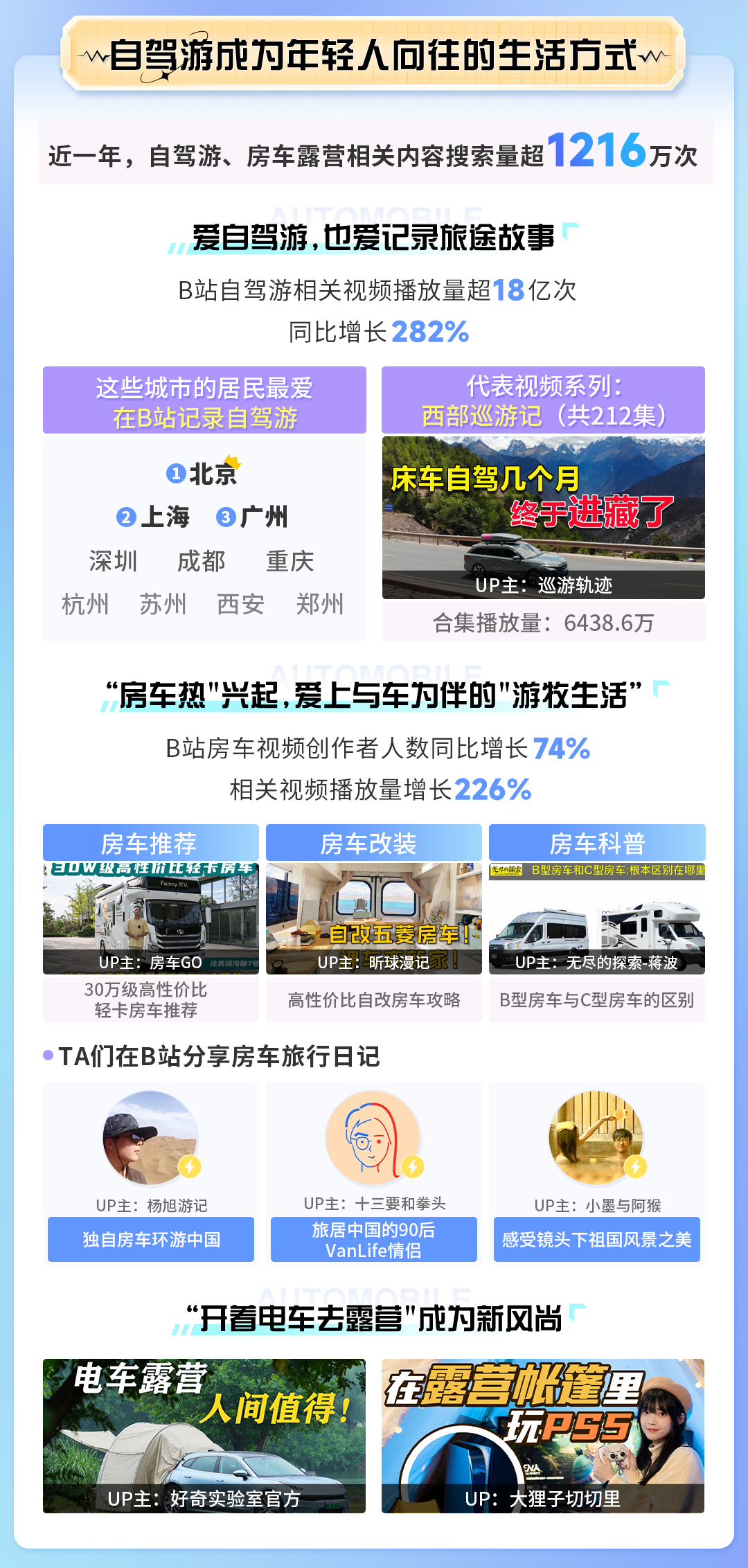
Go on road trip is a lifestyle that young people in bilibili yearn for, and the related videos have been played more than 1.8 billion times, up 282% year-on-year. With the rise of RV craze, more creators shared their RV diaries in bilibili, and the number of RV creators in bilibili increased by 74% year-on-year. The launch of the "camping mode" of new energy vehicles has further promoted "weekend tram camping" to become a new fashion for young people to travel.

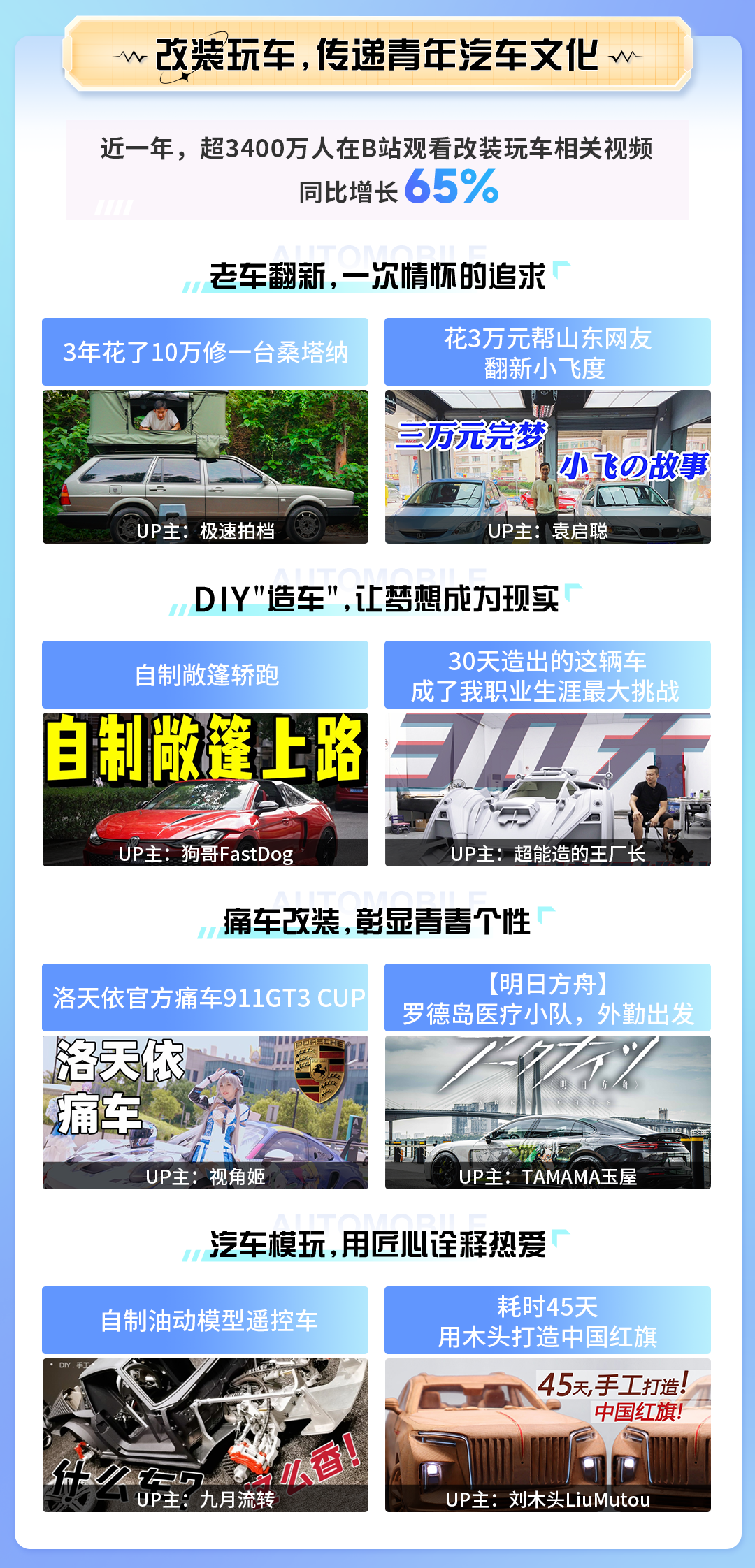
There are a large number of car modification experts active in bilibili, who have created a wealth of car modification and play works, such as old car renovation, DIY "car making", car modification and car model play. In the past year, more than 34 million people watched videos related to refitting cars in bilibili, a year-on-year increase of 65%. In addition, in-depth car science content also performed well in bilibili, and the number of videos related to car knowledge increased by 119% year-on-year.

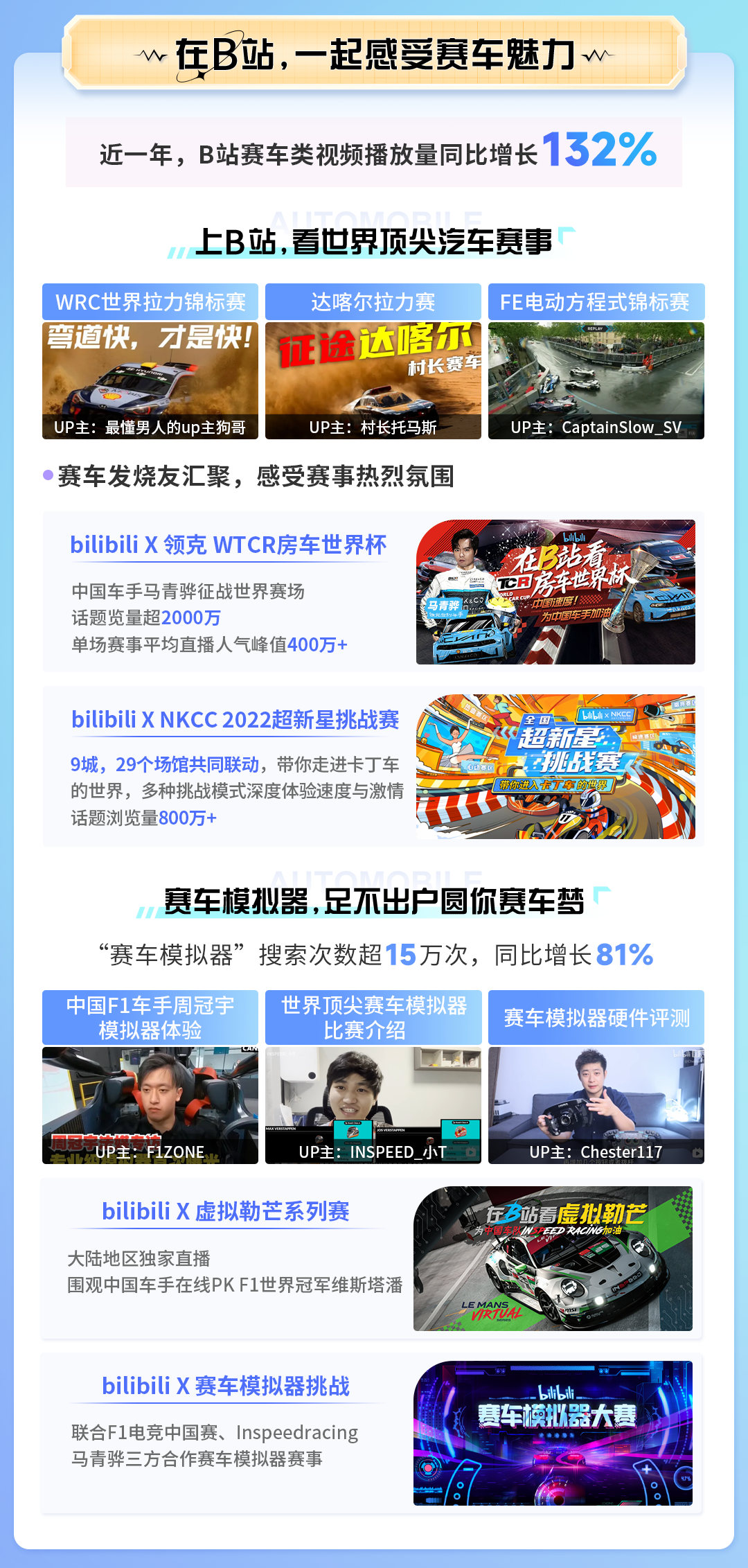
In the past year, the number of racing videos in bilibili increased by 132% year-on-year. UP owners created interesting racing commentary videos and created a strong racing culture atmosphere in bilibili. In addition, the "racing simulator" that can experience the pleasure of racing without leaving home began to receive more attention, with more than 150,000 searches, an increase of 81% year-on-year.

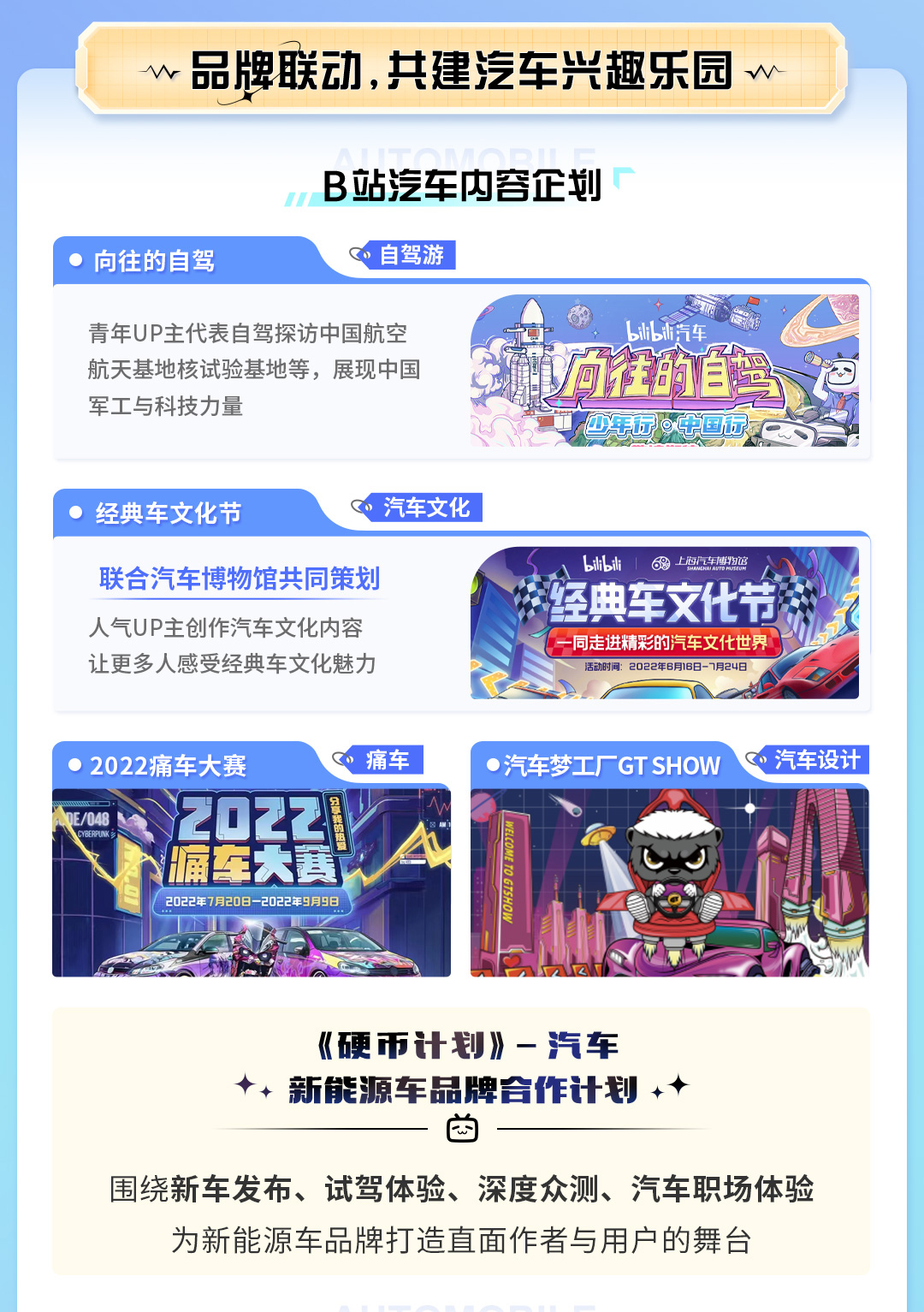
With the development of various circles of automobile culture in bilibili, bilibili has also initiated automobile content planning with various themes, such as go on road trip, automobile culture, painful car and automobile design. This year, the new energy vehicle brand cooperation plan "Coin Plan"-Automobile was also released, which built a stage for new energy vehicles to face the authors and users around the release of new vehicles, test drive experience, in-depth public testing and automobile workplace experience.

Disclaimer: This article is reprinted by our website, aiming to provide readers with more news information. The contents involved do not constitute investment and consumption suggestions, and are for readers’ reference only.

[Editor: Zhong Jingwen]

[Depth] Several ways to die in Hong Kong paper media

"The paper media is dead!" This exclamatory sentence has gradually become a declarative sentence in Hong Kong, and it is no longer a topic of academic discussion. In the past week, many Hong Kong people who used to buy a newspaper in the morning to "sigh" their morning tea suddenly sighed, and it was hard to see "Xin Bao" and "Cheng Bao" in convenience stores any more.

Without any warning, the 56-year-old New Newspaper suddenly announced at 5: 00 pm on July 11 that it would stop publishing on the 12th and officially end its business. The newspaper published that day became out of print, and 130 employees were laid off immediately.

This traditional newspaper, which experienced the ups and downs of Hong Kong’s newspaper industry, ended up closed, although it was taken over by Emperor Group and Macau gambling king Stanley Ho. That night, all the news content on the homepage of the New Newspaper website was deleted, and the website page directly jumped to the announcement of publication suspension. The announcement said that thanks to readers’ support.

New Newspaper was founded on October 5th, 1959, and was founded by Bin Luo, a famous journalist. In the early days, it attracted readers by horse racing news, serial martial arts novels and other contents, and once won the fame of writers such as Ni Kuang and Yi Shu. Yang Shoucheng, chairman of Emperor Group, bought Newspapers in 1992, and Stanley Ho, the gambling king of Macau, became a shareholder in Newspapers in 2009.

Why did New Newspaper, which grew up with a generation of Hong Kong people, close down? "New Newspaper" wrote in the closure announcement, "With the emergence of free newspapers, the sales volume of traditional newspapers has dropped sharply in recent years, and readers’ habits of reading newspapers have changed. The newspaper has made many appropriate reforms under feasible methods and budgets, but it is still in a state of long-term loss."

Gu Yaokun, the president of New Newspaper, felt sorry for the closure. He lamented that it was very difficult to run newspapers all over the world, and young people in Hong Kong lost interest in paper media. Gu Yaokun said that the New Newspaper had been reformed many times, hoping to reduce costs and change the long-term loss situation, but the results were very poor, and the decision to close down was heavy and difficult.

"Due to the sharp drop in advertising revenue, we laid off 40 employees in October last year, but now fewer and fewer people in Hong Kong read newspapers." Gu Yaokun revealed that the annual loss of New Newspaper is calculated with 8 figures (HK$ 10 million).

Gu Yaokun also felt that even the most famous horse racing news in New Newspaper, many horse racing fans have switched to using tablet computers to check horse information in the racecourse instead of turning to newspapers.

In less than a week, the Hong Kong media haven’t finished singing the elegy of the New Newspaper. On July 16th, Cheng Bao, which has been founded for 76 years, suddenly announced that it would suspend publishing the printed edition for the next two days, and it is unknown when it will be reissued.

A reporter from Chengbao told the interface journalist that in fact, Chengbao has long been rumored to have closed its business, but so far wages have been paid normally, and the electronic version of the newspaper still has to be published, so there is no big impact, and employees still need to go to work normally.

According to the interface journalist’s understanding, Chengbao’s publication was suspended mainly because its parent company Chengbao Media Group was liquidated. Chengbao Media Group was suspended on the Hong Kong Stock Exchange 10 years ago and was forced to liquidate recently. KPMG was appointed as the provisional liquidator by the Hong Kong court on July 15th, and the newspaper operation account of Chengbao was frozen on the 16th, which made Chengbao unable to pay the printing fee.

Chengbao is "older" than Xinbao, and was founded by He Wenfa and others in 1939. In 1950s, Cheng Bao was once the highest-selling newspaper in Hong Kong, but after the newspaper price war in 1990s, its sales volume declined seriously, and it was transferred many times after 2000. According to the 2014 interim financial statement of Chengbao Media Group Co., Ltd. (hereinafter referred to as Chengbao Media), the company’s net debt is about 480 million Hong Kong dollars (about 385 million yuan).

Interface journalists inquired that Chengbao Media announced its results in the third quarter of 2014 in February 2015, with a turnover of 12.05 million Hong Kong dollars (about 9.6545 million yuan), down 33.8% year-on-year. The recorded loss increased from 930,000 Hong Kong dollars (about 745,100 yuan) in the same period of last year to 13.38 million Hong Kong dollars (about 10,720,100 yuan). In October 2014, the company announced its financial results for the fiscal year ending in March, and its revenue recorded 68.08 million Hong Kong dollars (about 54.5457 million yuan), down 9.7% year-on-year. The loss expanded to 40.81 million Hong Kong dollars (about 32.697 million yuan). Further, in 2012, Chengbao Media lost 10.87 million Hong Kong dollars (about 8.709 million yuan) for the whole year, and in 2011, it lost 40.47 million Hong Kong dollars (about 32.4246 million yuan).

Gu Zhuoheng, Chairman of the Board of Directors of Chengbao, said that he would first inject HK$ 5 million (about RMB 4.006 million) and submit a plan, and then inject RMB 100 million every year, hoping that KPMG would apply to the court to resume the operation of Chengbao.

While Hong Kong citizens have not recovered from their consternation and regret for Cheng Bao, the Next Weekly trade union under One Media suddenly announced that Next Weekly will cut its staff by half in a short time, and then decide whether to stop publishing in mid-September.

The Hong Kong Journalists Association regrets the closure of the New Newspaper. Cen Yilan, chairman of the Association of Journalists, said that the emergence of free newspapers, the development of the Internet and smart phones have made traditional newspapers face unprecedented threats.

Huang Yu, a professor of journalism at Hong Kong Baptist University, told the interface journalist that Cheng Bao and Xin Bao are both precarious newspapers. They have no unique position in the market and cannot attract readers and advertisers. They have been in a weak state in the market competition for a long time.

Hong Kong has a population of more than 7 million, but there are more than 20 highly market-oriented local and international newspapers with fierce competition.

Huang Yu bluntly said that compared with the mainland newspaper industry, the Hong Kong newspaper industry is "particularly difficult". He said: "Newspapers in both places are undergoing transformation, but what is special in Hong Kong is the impact of free newspapers, which has prompted the decline of traditional newspapers in Hong Kong to be faster and more thorough."

Unlike the mainland market where urban newspapers are everywhere and free newspapers are half dead, free newspapers are popular in Hong Kong.

At present, there are at least four free newspapers in Chinese in Hong Kong. Metropolitan Daily, which belongs to Swedish newspaper group, was first published in Hong Kong in April 2002, and now it distributes about 400,000 copies every day. Headline Daily, which belongs to Sing Tao Group, was founded in early July 2005, and now its daily circulation reaches 850,000, the highest in Hong Kong. The other two are am730 and Qing Bao.

Free newspapers are distributed by special personnel in subway stations, shopping malls, communities and other places every morning. Compared with the traditional paid newspaper, the content of free newspaper is relaxed, with more pictures and shorter content.

In addition, the income source of free newspapers only depends on advertisements. According to a research article published by Su Keyi, a professor at the School of Journalism and Communication of the Chinese University of Hong Kong, according to the statistics of admanGo, an advertising market research company, the advertising market share of free newspapers in Hong Kong has increased from 6% to 14% in the past five years, but the advertising revenue of paid newspapers has decreased by 1% year by year.

Free newspapers continue to occupy the newspaper market in Hong Kong, and Hong Kong people care about local news in Hong Kong. Free newspapers have been able to meet the reading needs of the vast majority of people, which has caused a great impact on paid newspapers.

Cen Yilan, chairman of the Association of Journalists, said that the paid newspapers are in a new round of elimination war in the face of the decline in readers and advertisements. It is not surprising that the paper media is facing graduation, but they are not pessimistic about the prospects of the media industry.

However, some scholars believe that the influence of traditional paid newspapers is incomparable to that of free newspapers. Zhang Shaowei, a senior lecturer at the School of Communication, Hong Kong Baptist University, told the interface journalist that after 10 years of impact of free newspapers, the influence of paid newspapers in Hong Kong on society is still incomparable to that of free newspapers. "Paid newspapers have editorials and comments from a large number of influential social figures, which can have an influence in society."

Different newspapers have different status in the eyes of advertisers. "The advertisements of free newspapers are mostly supermarkets, beauty and health products, and the consumption power of consumer groups is not strong, while paid newspapers still attract large advertisements such as cars and luxury goods." Zhang Shaowei said that there has always been competition between free and paid newspapers, but there is not much overlap.

If we say that under the impact of free newspapers in the past 10 years, Hong Kong’s paid newspapers can still stand up, then the new media format brought about by the development of the Internet will make Hong Kong’s paid newspapers confused. Mobile phones and tablets have become an indispensable part of Hong Kong people’s lives. Especially after the launch of iPhone4 in 2010, Hong Kong people quickly developed the habit of surfing the Internet on mobile phones. In the process of transformation, Hong Kong media actively or passively developed various new media.

In April 2015, a survey conducted by the Public Opinion Research Program of the University of Hong Kong found that television continued to be the main news source for the public among various media, but the Internet replaced newspapers and became the second largest news source for Hong Kong people for the first time.

More and more readers are used to reading online newspapers instead of paper ones. Nowadays, most newspapers in Hong Kong have created their own new media applications. Newspapers such as Wen Wei Po, Ta Kung Pao and Commercial Daily publish complete scanned versions to official website and new media applications free of charge every day, while newspapers such as Hong Kong News and Ming Pao adopt a subscription mode.

Apple Daily, a subsidiary of One Media, is at the forefront of the reform of new media. According to the information of the Hong Kong Publishing Sales Notary, the average daily sales volume of Apple Daily dropped to 259,000 in 2011, down nearly 12% year-on-year, and even dropped to 170,000 in 2014.

In recent years, Apple Daily has been actively transforming, and its income source has begun to expand from newspapers to the Internet, vigorously promoting vivid "moving news". "Moving News" has become the main channel to attract readers, and the APP has long been ranked in the forefront of Hong Kong’s mobile phone software download list. In addition, the Facebook page of Apple Daily has a total of about 1.48 million likes, while the YouTube channel has 924,000 subscribers and has been watched 1.09 billion times. These figures are beyond the reach of the paper platform of paid newspapers.

Huang Yu said that among the major newspapers in Hong Kong, Apple Daily and other newspapers have expanded well on the online platform, and all newspapers are desperately earning click-through rates on the online platform, occupying a favorable position. "Moving News" attracts a large number of young people, and the effect is also considerable.

In addition to the transformation promoted by traditional media, some small-scale online news media have become active since 2012. Most of these news organizations were founded by former mainstream media reporters, commentators and businessmen, and most of them first operated with Facebook as the main line, which was divided into business model, social organization model and non-profit mode, and received wide attention.

Among them, some online media with clear political inclination are also sought after by Hong Kong netizens. Position News, established during a student movement in 2012, has been a media platform for some people in Hong Kong to express their opinions. According to the official website information of Position News, the platform operates on the principle of non-profit and accepts unconditional donations from the public.

Huang Wei said that since 2010, Hong Kong society has gradually become politicized from the economic society. At this time, the media with strong mobilization and persuasive communication characteristics came into being, and the society has a stronger demand for such media.

However, most new media rely on traditional news organizations as the first-hand source of online news, only adapt and comprehensively report, and rarely have their own interview teams. Zhang Shaowei pointed out that Hong Kong’s new media is only a marginal market at present, and new media organizations have their own positions, but they don’t have a lot of information sources, and it is difficult to set the agenda.

In May 2015, Hong Kong G newspaper was officially launched. In the past two months, the most articles on Facebook have been read 300,000 times. CHOW Yung, Robert, the founder, was previously engaged in a number of media. In an interview with an interface journalist, he introduced that Hong Kong G newspaper has no reporters for the time being, only 10 editors, and it is estimated that it will invest about 4 million Hong Kong dollars (about 3,204,800 yuan) a year.

In response to the question about the original intention of being a new media, CHOW Yung, Robert said that traditional newspapers can’t be a new media without traditional thinking, and new media can be a short and quick analysis. "We don’t have a reporter now, but the editor will immediately comment on the news and make efforts to interpret it."

New media needs to solve the problems of funding sources and long-term operation. In June 2015, Zeng Yucheng, the chairman of the Legislative Council, was suddenly exposed by an online new media to a recording suspected of involving racial discrimination, which caused an uproar. This online media is HKFP(Hong Kong Free Press), an English online media that has only been online for two weeks.

Tom Grundy, the founder of HKFP, told the interface journalist that the website launched fund-raising on the crowdfunding platform in early May, and the response was extremely enthusiastic. Within two days, it raised the target of 150,000 Hong Kong dollars (about 120,200 yuan), and when the fund-raising was completed, it raised 588,000 Hong Kong dollars (about 471,100 yuan) in excess.

At present, HKFP has eight journalists. Tom Grundy pointed out that crowdfunding funds are mainly used for journalists’ salaries. The original target of 150,000 Hong Kong dollars (about 120,200 yuan) is enough for HKFP to operate for two months. Every extra HK$ 50,000 (about RMB 40,100) raised can support HKFP to operate for one more month.

HKFP funds mainly come from fundraising and sponsorship. Tom Grundy said that after HKFP has been in operation for a period of time, it will open up more sources of income, such as membership payment subscription, advertising income and manuscript fee income, and will continue to raise funds through fundraising or mass fundraising.

There are many others like HKFP that expand new media business with Facebook as the main line. Huang Yu said that new media appeared in Hong Kong for five or six years, especially after the emergence of social media, the channels for citizens to obtain information and social interaction have changed greatly, so that small-scale capital-operated media operations can survive for a certain period of time.

However, the media of this kind of new media has not yet been finalized. Huang Yu said that the cost of social media is not high, so there are various ways to invest in the media now, but how long this kind of media can last remains to be seen.

"But more and more people who develop new media are beginning to rely on traditional media. Only when these people can fully engage in new media with the three weapons of product, capital and market will they move to another new stage." Huang Wei said.

Free newspapers are competing with traditional newspapers to seize the advertising market, and new media are springing up like mushrooms after rain. Under the double squeeze, the life of traditional media in Hong Kong is not easy.

Huang Yu said that the overall decline trend of paper media is the background of the transformation of the global media industry. Hong Kong’s market economy is highly developed, and the paper media will inevitably be impacted by fate. With the gradual completion of their historical mission, the mode of mass media communication will also undergo important changes.

Zhang Shaowei, on the other hand, feels that the traditional newspapers in Hong Kong have been undergoing transformation and trying to survive, but there may continue to be newspaper closures in the future.

This is probably the reality that traditional media have to face.

Zhiyuan Artificial Intelligence Research Institute was established in Beijing

  People’s Daily Online, November 14th (Reporter Zhao Yongxin) At the opening ceremony of the 2018 China (Beijing) International Technology Transfer Conference, the Beijing Zhiyuan Action Plan was officially released, and the Beijing Academy of Artificial Intelligence (BAAI) was unveiled. Wang Zhigang, Party Secretary and Minister of the Ministry of Science and Technology, and Chen Jining, Deputy Secretary of Beijing Municipal Committee and Mayor, attended the meeting.

  In his speech, Mayor Chen Jining pointed out that Beijing Zhiyuan Artificial Intelligence Research Institute is another important new research and development institution in Beijing, following the Brain Science and Brain-like Research Center and the Quantum Information Science Research Institute. The research institute will gather superior units in the field of artificial intelligence, such as Peking University, Tsinghua University, China Academy of Sciences, Baidu and ByteDance, and adopt new scientific research organization forms and talent introduction and training modes to promote the development direction of artificial intelligence and key breakthroughs in theories, methods, tools and systems. Beijing will gather government, enterprise and social data on this platform, build new open source artificial intelligence tools, and integrate the computing power of universities and large enterprises, and open them to various AI R&D institutions, and welcome artificial intelligence researchers from all over the world to participate in the use.

  Xu Qiang, director of Beijing Science and Technology Commission, released Beijing Zhiyuan Action Plan. Under the guidance and support of the Ministry of Science and Technology and the Beijing Municipal Government, the plan was jointly proposed by government departments, enterprises, universities and institutes. It is the top-level design for the development of artificial intelligence in Beijing and an action plan to gather the wisdom of all parties.

  The vision and goal of Beijing Zhiyuan Action Plan is to support scientists to break into the "no-man’s land" at the forefront of artificial intelligence science and technology, to promote revolutionary and subversive breakthroughs in artificial intelligence theories, methods, tools and systems, to lead the frontier of artificial intelligence and the direction of technological innovation, to promote Beijing to become the source of global artificial intelligence academic ideas, basic theories, top talents, enterprise innovation and development policies, to support the development of artificial intelligence industry and to promote the depth of artificial intelligence.

  Beijing Zhiyuan Action Plan is an integrated and open system, focusing on four tasks — —

  First, with shared data, intelligent computing programming framework and computing infrastructure as the core, we will promote open source algorithms, build an innovative ecology, and build an open service platform for Beijing Zhiyuan.

  Second, promote original innovation and build a high-level joint laboratory. Beijing Zhiyuan Joint Laboratory will be built with national and provincial-level scientific and technological innovation bases or independent laboratories in the field of artificial intelligence as a unit, and research teams and projects will be arranged around major core basic theoretical issues in the field of artificial intelligence, so as to carry out interdisciplinary and collaborative innovation research and serve the national artificial intelligence development strategy.

  Third, cultivate and introduce simultaneously, and gather high-end talents. Looking at the world, we will gather basic research and innovation resources in the field of artificial intelligence, and introduce and cultivate top artificial intelligence talent teams with global influence.

  Fourth, strengthen cooperation with Industry-University-Research, hold a global artificial intelligence summit, and build Beijing into a central hub linking the world’s artificial intelligence industry and academic resources.

  According to the deployment of Beijing Zhiyuan Action Plan, Beijing Science and Technology Commission and Haidian District Government promoted the establishment of Beijing Zhiyuan Artificial Intelligence Research Institute. Relying on Peking University, Tsinghua University, China Academy of Sciences, Baidu, Kuangshi, Meituan Review, Xiaomi, ByteDance and other advantageous units in the field of artificial intelligence, the Institute built an open service platform, held an artificial intelligence summit, coordinated the promotion of joint laboratories and personnel training, and adopted a flexible and independent operation mechanism that was in line with international standards to realize the "traveling lightly" and "running faster" of the Institute. The Institute implements the dean responsibility system under the leadership of the Council. Zhang Hongjiang, the former chief technology officer of Microsoft Asia-Pacific R&D Group and the partner of source capital investment, served as the first chairman, and Huang Tiejun, director of the Computer Department of Peking University, served as the first dean. The research institute will give full play to the main role of enterprises, while the government will focus on formulating policies, creating environment and providing good services.

What is the current price configuration of 23 Cadillac Escalades?

 When it comes to the large-size SUV, netizens are most worried about the fuel consumption of this car. This size and weight are combined with wind resistance. If 15 oils are very, very fuel-efficient, even some netizens ridiculed that this is the legendary model where the throttle will appear in the end. Of course, local tyrants who like this car and can afford it don’t care about gas money, because they love the most important new generation Escalade (parameter | picture) for the first time and adopt Gideon Whisper Beige decorative combination, which makes the interior by going up one flight of stairs improve the overall atmosphere.

  The body size of the 2023 new car has far exceeded the current model. The body length of the 2023 Escalade is 5382mm, the width is 2059mm, the height is 1948mm, and the wheelbase is 3071 mm. The ESV version is 5766mm, the width is 2059mm, the height is 1942mm, and the wheelbase is 3407 mm. The 22-inch rim is the standard of the new Escalade 2023, and the tire size is 275/50 R22. The double six-spoke rims of sports models are more dynamic, while the rims of luxury models in the small picture are more elegant.

  As for the interior of Tianjin Guardian’s new 23 Escalade National Six cars, the new car also adopts a brand-new design style, while three LCD screen highlights, the 7.2-inch screen on the left can display information such as fuel consumption, the 14.2-inch full LCD instrument panel in the middle and the 16.9-inch central control screen on the right. In addition, the rear of the high-profile car is equipped with two 12.6-inch touch entertainment screens.

  The 2023 Cadillac Escalade not only gives you a big house, but also provides a full set of high-tech configuration, which is equivalent to a full set of smart home equipment. Therefore, this car can not only accommodate standard-sized adults in the third row, but also have enough luxurious leg space in the second row, and will not interfere with each other. In contrast, everyone likes the layout of the second row, just like the LM we like in China, which is similar to the spacious design of aviation seats. The second row has achieved the same luxurious configuration as the first row, and what the heating, ventilation and massage of the seats, as well as the leather feelings that should be there, have also gained a good experience in the second row.

  For the rear end, it is expected that the penetrating decorative strip under the rear door glass will also be changed from the chrome-plated luxury version to the bright black decorative strip, and the taillights will have a blackening effect. At the same time, it can be seen that the new car adopts a bilateral four-outlet exhaust layout with more outstanding performance elements, which is obviously different from the ordinary version of the bilateral double-outlet layout.

  National sales hotline: 13269115555 Manager Zhang (same as WeChat)

  Tianjin gangjiade luxury car specialty store

  Disclaimer: The above car purchase preferential information is provided by the comprehensive dealers of this website, and the price fluctuates greatly due to market factors, which is only for car purchase reference; The distributor is responsible for its authenticity, accuracy and legality, and this website does not provide any guarantee or assume any legal responsibility.