History of Self-portrait: From Narcissus Teenager to Self-portrait Girl

Narcissus daffodil teenager.

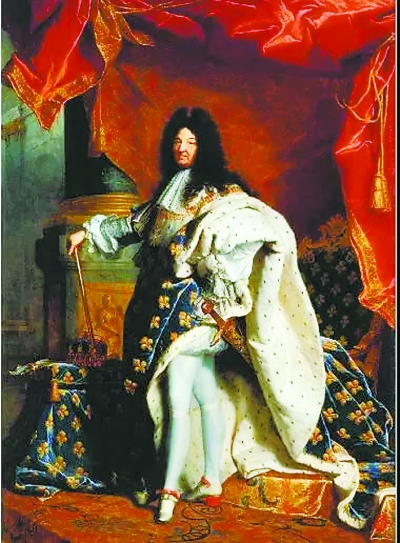
Trigaud, a French court painter, works "Full-length portrait of Louis XIV in coronation suit at the age of 63".

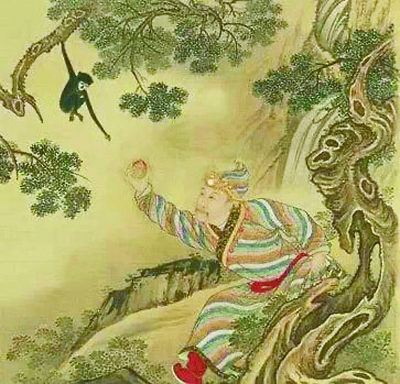
Selected Pictures of Yongzheng Carpe diem.

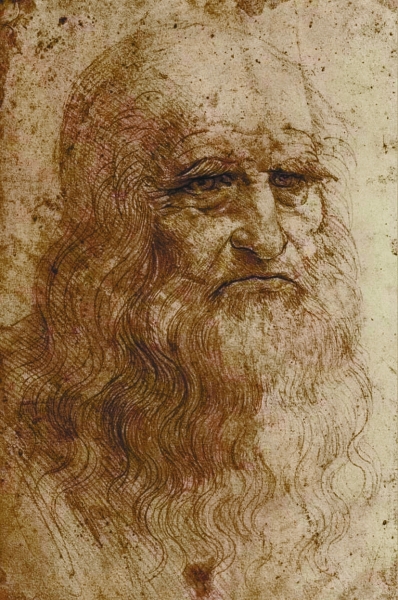
Self-portrait of the famous painter Leonardo da Vinci.

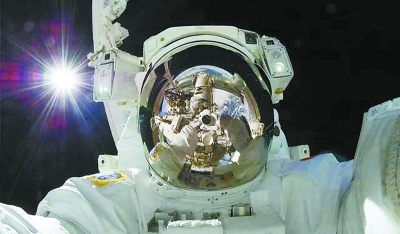
Japanese astronaut Akihiko Shingo takes a selfie in space.

  As early as ancient Greece, the Oracle of "Know Yourself" was engraved on the lintel of Apollo Temple. This is an inevitable question in everyone’s life: who am I? Who am I? Is this what others think of me as? … … Self-focusing "selfie" is what we think of as proof of our interaction with others.

  Self-portrait is popular in the internet age, but "self-portrait" is not the product of the internet age. People have always been enthusiastic about themselves, but in the past, they were limited by technical conditions, and the privilege of seeing their own visual images belonged to only a few people. After the Renaissance, painters with technical advantages picked up brushes and combined self-portrait with art. With the advent of photography, it is possible for ordinary people to record themselves. After that, the rapid development of digital cameras and high-definition mobile phones, as well as the fuel of Internet information sharing, ushered in a big explosion of self-portraits, machine imaging.

  Privilege of nobility — — Portrait of the emperor

  Narcissus is a beautiful boy in Greek myths and legends. When he was born, his parents received the proverbs from the prophet — — Don’t let him see his face clearly. However, at the age of sixteen, Narcissus caught a glimpse of his face when he passed a mirror-clear lake in the forest. The beautiful boy was addicted to the reflection in the water, and finally fell into the bottom of the lake and turned into a daffodil on the shore.

  The inverted image of daffodil teenagers is a metaphor of human self-cognition. Humans observe four situations and exchange information with others to understand and define the world around them; At the same time, human beings also examine their own external presentation, show it to others in various ways, and define themselves through feedback from others. Just as Charles Horton Cooley, an American sociologist, expounded the "Byakki Smoker" theory in "Human Nature and Social Order" in 1902: "We understand ourselves by imagining how others feel about our behavior and appearance" — — And this may be the endogenous force for the long-lasting self-portrait.

  Self-gaze was born at the beginning of human cognition. A primitive man who came back from hunting with a full load may be to show his strength, or to record the moment of victory. In short, he will draw murals of his hunting with colored soil by the light of the bonfire in the cave. These primitive murals can be regarded as the earliest self-portraits of human beings. Therefore, selfie has a long history. In the years when human beings have not mastered photography technology, portrait is the original form of selfie.

  Before the 16th century, only the aristocrats could hire painters to see their own visual images. Although the portrait is not written by myself, they pay the painter, so it is their preference, not the painter’s, that determines the direction of the painting. The portraits of emperors in the era of centralization are not only for recording, but also for showing the authority of emperors. King Louis XIV of France claimed to be the king of the sun. In one of his widely circulated portraits, Louis XIV wore a golden laurel and portrayed himself as Apollo. Queen Elizabeth I left hundreds of portraits, but most of them looked like the same one — — Almost fair skin and unsmiling expression — — The real Elizabeth had smallpox, her face was full of potholes, and her mouth was rotten because she ate too much sugar. Compared with real people, portraits are obviously beautified.

  The portrait with the most selfie style comes from Yongzheng, a fan of "Let’s have fun". The "map of pleasure", which began in Nanqi, usually depicts the royal entertainment life. Back to Yong Zhengdi, he was the absolute master of his "map of pleasure". Yongzheng’s "map of pleasure and pleasure" is not only a display of external imperial power, but also related to the inner side of "poetry and distance" Long before he ascended the throne, a silk painting called "Plough and Weaving in Yin Zhen" revealed this clue. In the picture scroll, Yongzheng dressed himself as a farmer who stood on the ridge with an umbrella and led the people to harvest. In the later "Atlas of Joy and Joy in Yongzheng" (collected in the Palace Museum), Yongzheng wore a western wig and European clothes to hunt and stab tigers, or pretended to be a fisherman who fished alone in the cold river, or shot a bow barefoot, or sat quietly in meditation at sunset, or recited songs in ancient Panasonic &hellip. … It’s quite a bit like online celebrity bloggers "posing" today.

  The convenience of artists — — self-portrait

  It is difficult for ordinary people to see their portraits, and nobles realize their portraits with the help of painters’ skills. What about the painters themselves who have fantastic brushes? In 1656, the Spanish painter Diego Velá zquez indirectly expressed the advantages of the painter with his masterpiece Gong E. When painting a portrait of the little princess, Velazquez skillfully incorporated his own painting scenes into the picture scroll. In the frame, Velazquez stands in front of the frame with a brush in his hand, which makes it difficult for the viewer’s eyes not to bounce back on him when they touch the frame. This is an artist’s visual game and a painter’s privilege.

  Few painters can refuse the privilege of self-portrait, just as it is difficult for people today to refuse the selfie camera of mobile phone. At one time, few people paid attention to the painter’s self-portrait. Occasionally, a painter secretly drew one for himself, and he could only admire himself. However, since the Renaissance, art has gradually been respected by people, and even the portrait art of painters has stood in the spotlight. The self-portrait that best represents the Renaissance spirit comes from the master Leonardo da Vinci. In his self-portrait of his later years, his tight lips, deep eyes and smooth beard depict an old, wise and rational human image. The most prolific self-portrait creator is the Dutch painter Rembrandt. From the age of 14 to 63, Rembrandt left more than 100 self-portrait works, spanning his fanatical youth, proud middle-aged and lonely old age; Rembrandt’s skin in the painting ranges from compact luster to wrinkled face, and his clothes range from fine clothes to coarse rags. What remains unchanged is his persistent pursuit of art, which can almost become a personal portrait epic. The most straightforward self-portrait comes from the painter Van Gogh, who painted a self-portrait with his ears cut off at the stage of his artistic madness, expressing the painter’s strong self-awareness.

  Victor lebrun is a famous French neoclassical painter. In 1779, he was invited to the Palace of Versailles to paint a portrait of Queen Marie Antoinette. Different from the traditional royal portrait, the queen in her works is more like an ordinary aristocratic girl, dressed comfortably and casually. But her most realistic figure painting is the self-portrait of her and her daughter together. The female painter looks directly at the viewer and holds her daughter in her arms. Her expression is kind, natural, warm and moving, just like today’s parent-child photo. Lebrun painted a number of self-portraits, in which she embraced her daughter, taught students and painted in the studio, just like a female autobiography under the changing times.

  The Light of Photography — — Real selfies are possible.

  In 1826, in Burgundy, after eight hours of exposure waiting, Joseph Nicephore Nieps finally succeeded in developing the scenery outside his attic window on a lead-tin alloy plate, giving birth to the first photo in human history. Nieps has been studying this kind of instantaneous image condensation for more than twenty years. He named this photography technique "sunlight etching" and refused to make it public. So the inventor of human photography was named after his partner Louis Daguerre. On the basis of Nieps’s invention, Daguerre changed to mercury vapor to enhance the image appearance and delicacy of exposed copper plate, and shortened the exposure time from 8 hours to 30 minutes. Shortly after Nieps’s death, at the meeting of French Academy of Sciences and Academy of Arts in August 1839, "Daguerre’s silver photography" was officially made public, and the light of photography shone into the public.

  The English word "photography" in photography consists of Greek words "phos" and "graphos", meaning "light" and "writing" respectively. As the name implies, "photograph" means to replace the human brush and record the moment as eternity with light. The invention of photography amazed people and changed the way people watched the world. The most typical example is a photo of the earth called "Blue Marbles" taken by astronaut Jack Schmidt on the Apollo spacecraft in 1972. This photo has opened a new perspective for all mankind to observe the world, and for the first time, from the perspective of "God", we can see the whole picture of the planet where we live and marvel at its roundness, tranquility and perfection.

  Almost at the same time when photography was born, people not only watched and photographed external images enthusiastically with cameras, but also tried to be in front of the camera to satisfy their curiosity about themselves — — Self-portrait was born almost at the same time with the invention of photography. The first batch of self-portrait attempts were artists transferred from painters, such as French photographer Hippo Park Jung Su Baier. Speaking of which, he was a competitor of Daguerre. As early as May 1839, he submitted the exposure method of "direct positive film technology" to the French Academy of Sciences, but in the end, Daguerre’s publicity was robbed by mistake. Baier created a selfie titled "Self-portrait of the Drowning Man" to protest. In the photo, he lay naked on the water side and played a drowning man. His eyes were closed and his hands were black. At one time, the public thought that he had really passed away. Thus, although Baier missed the title of the first inventor of photography, he went down in history as the first selfie taker.

  Camera evolution — — Self-timer from difficult to easy.

  It’s too difficult. Almost all early photographers who have taken selfies will have such complaints. Daguerre’s photographic equipment weighs 50 kilograms, and the exposure time of 30 minutes means that the selfie taker has to stay still in front of the camera for more than half an hour. No wonder Baier chose "suspended animation" for his selfie, and it is much easier to close his eyes and take a nap for an hour. By contrast, in 1865, when Gannard, a French photographer, journalist and novelist, took a selfie in the mirror and sent it to a friend, he couldn’t help but write down the hardships behind the photo: "I looked in the mirror and took this photo. My hands are shaking, it’s too difficult to shoot. " The earliest personal selfie in China came from the first selfie of my family in a hundred years, which was created by Ms. Sun Sui Xin Ci, a visual education scholar, in 1901. The birth of this selfie was also a big struggle. In order to assist in shooting, Ms. Sun Sui Xin Ci made her own equipment, and it took more than a day of trial and error to get a satisfactory one. Artists are still like this, and it is conceivable how difficult it is for ordinary people to get a selfie.

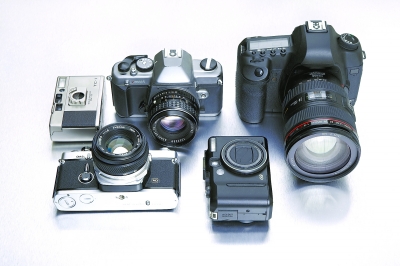
  Five years after the death of Daguerre, the father of photography, george eastman, an ordinary man, was born. Born in a poor family, he was fascinated by photography since childhood. After he got a job in a bank as an adult, he devoted his spare time and money to the research of camera dry photography. At the age of 27, Hysmans invented the earliest film and founded his own camera dry printing company. At the age of 34, Hysmans Company produced the first "Box Brownie" camera, which cost only $1 (Daguerre’s photographic equipment cost 400 francs); At the age of 35, Hysmans’s company was renamed Hysmans Kodak Company, which became the famous Kodak Company. Kodak Company has brought snapshot technology to the general public. Small and cheap cameras have become the daily consumer goods of the public, and ordinary people’s selfies have also begun to emerge. When people come into contact with photography, they try to take selfies by observing their postures and expressions in the mirror. The invention of film made portraits and self-portraits generally replaced by cheap photographic paper, but the real change was the digital camera that had a devastating impact on Kodak.

  In 1988, at the Cologne Expo, a digital camera NDS-1P jointly developed by Fuji and Toshiba attracted people’s attention. This is the first digital camera in human history, and its appearance means that the new electronic imaging technology has replaced the traditional silver halide technology, the cornerstone of Kodak’s survival — — Film, a storage medium, has been digitally melted. It is not only storage, but also digital evolution from imaging to transmission and even image modification. It is a distant thing to take photos in the early days with a whole set of cumbersome and costly equipment. The arrival of the digital age is of epoch-making significance to the history of personal selfies. Digital cameras are too friendly for selfie lovers. — There will be no more wasted film, and it can be checked and deleted through the LCD screen behind the camera immediately after shooting, which is both economical and can protect privacy. The self-timer delay function frees the photographer in the process of self-timer, and the distress of leaving reflective white spots in the middle of the photo when taking a self-timer in the mirror is gone forever. In addition, the invention of wireless remote control and cable release has expanded the range of activities of selfie takers, and they can record themselves and their surroundings. Various auxiliary self-timer functions such as anti-shake function and portrait automatic beautification function have emerged one after another, and the sales of digital cameras specially designed for self-timer are hot … … With the development of photography technology, ordinary people can easily take pictures for themselves, and selfie has finally changed from the pastime of nobles and the privilege of artists to the daily life of ordinary people.

  Mobile phone era — — Self-timer anytime, anywhere

  In 1973, on the street of new york, martin cooper, an employee of Motorola Company, successfully talked with others with a machine box the size of two bricks. This was the first mobile phone in the world, and today people call it a mobile phone. At that time, martin cooper might not have imagined how earth-shaking changes would take place in this machine 50 years later: its main functions are far more than just talking, but also surfing the Internet, paying, playing games and, of course, taking selfies.

  Today, more than 90% of online selfies come from mobile devices. For most people, the multifunctional, light and easy-to-use mobile phone is enough to take pictures instead of digital cameras, not to mention the continuous improvement of mobile phone manufacturers in mobile phone cameras. The earliest mobile phone with camera function came from Sharp J-SH04, which was released in 2000. A 110,000-pixel CCD camera was built in the back of the machine, and a convex mirror, that is, a selfie mirror, was intimately prepared next to the camera to help users see and adjust their actions in the convex mirror when taking selfies. In 2005, the prevalence of 3G network made the factory mobile phones begin to be equipped with front-facing cameras. The front camera was originally used for video calling under 3G network, but it was soon discovered by merchants that people used it to take selfies far more often than video calling. Camera, once only an accessory function, has evolved into an important indicator of mobile phones because of the popularity of self-timer. With the continuous evolution of mobile phone cameras, millions of pixels of smart phones become standard, and the imaging quality even surpasses that of ordinary cameras. Some mobile phones add a filter effect to the lens, making a "beauty mobile phone" which is the main selling point of selfie.

  The fission of network technology and the continuous upgrading of mobile phones in the 21st century have released people’s demand for taking selfies, which has made selfies grow rapidly, becoming a popular trend and even a mainstream cultural phenomenon. In 2013, the Oxford English Dictionary announced that the word of the year was "selfie", that is, in this year, 184 million selfies of social network users were spontaneously uploaded to the network. In 2014, Apple’s mobile phone was equipped with a front camera with excellent performance, which can automatically focus and fill the light in front. In this year, Time magazine in the United States called the selfie stick "one of the top 25 inventions in the world". Various beauty-shooting softwares emerge one after another, which help selfie users to skin and conceal blemishes, whiten and brighten photos, and even enlarge eyes or simulate makeup, and the operation is equally simple: choose filter lens — Taking pictures — Beautify photos — One-click upload Self-timer is like a script, which interprets the self-timer’s heart and state. When ordinary people can always adjust, pose the most beautiful posture, and even use software to modify and interpret different styles, they become artists of their own images. Every selfie is a performance that the photographer wants his image to be presented to others.

  Just as primitive people drew their rough outlines in caves and waited for their peers to admire them, feudal emperors instructed painters to paint portraits and frightened the world, and artists picked up brushes to show their artistic pursuits and spiritual world, ordinary people picked up their mobile phones to create and upload selfies, waiting for others to interpret and give feedback.

  Extended reading

  Space selfie and the era of reading pictures

  In 2012, a space selfie of Japanese astronaut Akihiko Shingo showed his selfie in a spacesuit. Although his face is completely obscured by his helmet and the picture has no caption, the reflection of the International Space Station on the astronaut’s helmet mask and the earth below the space station are enough to convey rich information — — This selfie is the best embodiment of promoting information exchange into the era of picture reading in the network era.

  Visual images are much richer than the information transmitted by words. In other words, countless selfies in the online world are also new ways of information transmission and socialization. Today, our image exists not only in the real world, but also in the online world.

Development and Reform Commission: The car guidance price is implemented by most dealers or will be recognized as a monopoly.

  BEIJING, March 23 (Xinhua) According to the official website news of the National Development and Reform Commission, the National Development and Reform Commission and relevant departments have studied and drafted the Anti-monopoly Guide on the Automobile Industry (draft for comments), which is now open to the public for comments.

  The Opinions define the concepts of automobiles and automobile manufacturers, distribution markets and after-sales markets, and clarify the prohibition and exemption of monopoly agreements.

  According to the Opinions, the suggested price, guided price or maximum price set by automobile suppliers for reselling automobiles and automobile after-sales accessories and supplies to dealers and repairers, and the suggested price, guided price or maximum price set for after-sales service working hours to dealers and repairers usually have efficiency effects. If, due to the pressure or encouragement of one party to the agreement, the suggested price, the guided price or the highest price are executed by most or all dealers, and the substantial effect is equivalent to the fixed resale price or the minimum resale price, these behaviors may be identified as fixed resale price or the minimum resale price according to the specific circumstances of each case.

  The National Development and Reform Commission said that the time for public consultation was from March 23, 2016 to April 12, 2016. Relevant units and people from all walks of life can log on to the "Anti-monopoly" column of the website of the National Development and Reform Commission (http://www.ndrc.gov.cn) Price Supervision Bureau Sub-station (http://jjs.ndrc.gov.cn/), click "Anti-monopoly Guide on the Automobile Industry (Draft for Comment)", put forward opinions and suggestions on the Guide, and send them to the National Development and Reform Commission (Price Supervision Bureau).

  At the same time, the National Development and Reform Commission announced the feedback channel, including address: No.38 Yuetan South Street, Xicheng District, Beijing, Price Supervision Bureau of the National Development and Reform Commission, zip code: 100824. E-mail: wudm@ndrc.gov.cn. (Zhongxin. com auto channel)

  Attachment: Anti-monopoly Guide on Automobile Industry (Draft for Comment)

  Price Supervision Bureau of National Development and Reform Commission

  March 23, 2016

  The State Council Anti-monopoly Committee

  Anti-monopoly guide on automobile industry

  (Draft for Comment)

  (March 2016)

  I. General principles

  Automobile industry is an important pillar industry of national economy, which plays an important role in promoting economic growth, technological innovation, employment and social development. In order to prevent and stop the monopolistic behavior of the automobile industry, reduce the cost of administrative law enforcement and operator compliance, promote scientific and effective anti-monopoly supervision, protect fair competition, safeguard consumer interests and social public interests, and promote the healthy development of the automobile industry, this guide is formulated in accordance with the Anti-monopoly Law of the People’s Republic of China (hereinafter referred to as the Anti-monopoly Law).

  (A) Concept definition

  1. Automobile refers to a vehicle driven or towed by power and having four or more wheels, which is used for carrying people and/or goods, towing people and/or goods, and for special purposes. It can be divided into two categories: passenger cars and commercial vehicles. For further classification of passenger cars and commercial vehicles, please refer to the relevant national standards (GB/T3730.1-2001 Terms and Definitions of Types of Cars and Trailers).

  2. New energy vehicles refer to vehicles that use new power systems and are driven entirely or mainly by new energy sources, mainly including pure electric vehicles, plug-in hybrid vehicles and fuel cell vehicles.

  3. Second-hand cars refer to cars that have been traded and transferred ownership from the completion of registration procedures to the national compulsory scrapping standards.

  4. Automobile suppliers refer to operators who provide automobiles, after-sales accessories and supplies, including:

  (1) automobile manufacturers;

  (2) The general automobile dealer established or authorized by the automobile manufacturer;

  (3) Automobile importers engaged in automobile wholesale business.

  5. Spare parts suppliers refer to operators who produce or provide automobile parts for initial assembly and after-sales parts.

  6. Automobile dealers refer to operators who engage in automobile distribution and service independently of automobile suppliers. In practice, car dealers can assume the role of car repairers at the same time, but car sales and after-sales service can also be separated from each other.

  7. Automobile repairers refer to operators who provide automobile repair and maintenance services.

  8. End users, as far as automobiles are concerned, refer to the owners of automobiles (subject to the motor vehicle registration certificate) and other persons who have the legal right to use automobiles (such as automobile lessees). As far as after-sales automobile accessories and supplies are concerned, it includes: (1) the owner of the motor vehicle who purchased these products and other people who have the legal right to use the automobile; (2) Repairers who use these products for repair rather than resale.

  9. Auto parts are classified according to the standards of use, brand, supply channel and quality, including initial parts, double standard parts, after-sales parts, original parts and homogeneous parts.

  (1) Initial assembly parts refer to the parts used to produce and assemble new cars.

  (2) Double-label parts refer to the initial assembly parts and after-sales parts marked with the trademarks, logos and part codes of the automobile manufacturer and the parts manufacturer.

  (3) After-sale accessories refer to products installed in automobiles to replace the parts initially installed in automobiles, including lubricants necessary for automobiles, but excluding fuel.

  (4) Original spare parts refer to after-sales spare parts provided by automobile suppliers or third parties designated by automobile suppliers, which are manufactured according to the specifications and product standards of automobile parts initially installed by using automobile suppliers’ brands or brands designated by automobile suppliers.

  (5) Homogeneous parts, also known as parts with equivalent quality, refer to after-sales parts that have obtained relevant certification and the quality is not lower than that of automobile parts initially installed, but do not include original parts.

  10. Maintenance technical information refers to the technical information necessary for automobile diagnosis, testing and maintenance in order to maintain or restore the technical condition and working ability of the automobile when it leaves the factory, prolong the service life of the automobile and ensure that the automobile meets the requirements of safe and environmentally friendly use.

  (2) Definition of relevant markets

  The automobile industry has a long industrial chain and various business types in the upper, middle and lower reaches. The definition of relevant commodity markets and regional markets follows the general principles and methods defined in the Anti-monopoly Law and the Guide of the State Council Anti-monopoly Committee on Defining Relevant Markets, and at the same time, the characteristics of the automobile industry and the specific circumstances of individual cases are considered.

  The basic basis for defining the relevant market of the automobile industry is substitution analysis. In a case, the demand substitution is firstly investigated, and then the supply substitution is investigated. For example, automobile distribution consists of two parts: wholesale and retail. Wholesale is for automobile suppliers and retail is for end users. According to the specific circumstances of the case, it may be necessary to define automobile wholesale and retail as subdivided related markets respectively; The automobile distribution market can be further subdivided from the perspective of supply substitution and demand substitution.

  The automobile after-sales market can be further subdivided into after-sales parts distribution market and after-sales maintenance market. In the automobile after-sales market, the after-sales maintenance service of a specific brand and model requires the use of after-sales accessories suitable for the brand and model, based on the maintenance technical information of the specific brand and model. From the perspective of demand substitution and supply substitution, the compatibility and locking effect of automobile aftermarket exist objectively, so automobile brand has become an important related factor to be considered when defining automobile aftermarket.

  Second, the monopoly agreement

  (1) Prohibition and exemption of monopoly agreements

  1. Basic provisions of the Anti-Monopoly Law

  Article 13 of the Anti-Monopoly Law prohibits horizontal monopoly agreements, article 14 prohibits vertical monopoly agreements, and article 15 stipulates the exemption situations and conditions of monopoly agreements. According to Article 15 of the Anti-Monopoly Law, if an operator claims that Article 13 or Article 14 of the Anti-Monopoly Law does not apply to his agreement, he must first prove that his agreement belongs to one of the circumstances listed in Article 15. Secondly, in addition to "to protect the legitimate interests in foreign trade and foreign economic cooperation" and "other circumstances stipulated by law and the State Council", the operator should also prove that his agreement will not seriously restrict the competition in the relevant market and enable consumers to share the benefits arising therefrom.

  In order to prove that its agreement will not seriously restrict the competition in the relevant market, the operator can evaluate its market power in the relevant market. To evaluate the market power of operators, we can refer to the factors listed in Article 18 of the Anti-Monopoly Law. Evaluating whether an agreement can enable consumers to share the resulting benefits can be investigated from the perspectives of price reduction, quality improvement, technological innovation, technological upgrading, and more choices of products and services.

  The specific procedures for operators to apply Article 15 of the Anti-Monopoly Law to claim exemption from monopoly agreements shall be stipulated separately by the relevant guidelines of the State Council Anti-Monopoly Committee.

  2. Presumptive immunity

  In order to reduce the cost of administrative law enforcement and the compliance cost of operators, this guide lists some situations of geographical restrictions and customer restrictions set by operators who do not have significant market power, and it can be inferred that the provisions of Article 15 of the Anti-Monopoly Law are applicable. Law enforcement practice and theoretical research have proved that these situations can usually improve the quality of distribution services, improve distribution efficiency, enhance the operating efficiency and competitiveness of small and medium-sized dealers, generally do not seriously restrict the competition in relevant markets, and enable consumers to share the benefits arising therefrom, thus meeting the conditions stipulated in Article 15 of the Anti-Monopoly Law.

  It is not necessarily reasonable, scientific and operable to set a fixed market share standard to evaluate whether operators have significant market power. However, taking the competition evaluation of vertical agreements as an example, law enforcement practice and theoretical research show that it accounts for 25%— Operators with a market share below 30% may be considered as having no significant market power.

  However, according to the specific circumstances of a case, if there is evidence to prove that the operator’s behavior does not conform to the provisions of Article 15 of the Anti-Monopoly Law, the anti-monopoly law enforcement agency can still apply Article 14 of the Anti-Monopoly Law to the relevant behavior.

  3. Case exemption

  In addition to the situations listed in this Guide where Article 15 of the Anti-Monopoly Law can be presumed to be applicable, if an operator claims that Article 15 of the Anti-Monopoly Law can be applied to his agreement, he needs to prove that his agreement meets the statutory conditions of Article 15 of the Anti-Monopoly Law according to the specific circumstances of each case, and judge whether his agreement can be exempted from each case.

  (2) Horizontal monopoly agreement of automobile industry

  1. Some types of horizontal agreements, such as research and development agreements, specialization agreements, technical standardization agreements, joint production agreements, joint procurement agreements, etc., can usually improve efficiency and promote competition, which is conducive to increasing consumer welfare. For example, horizontal cooperation agreements in the R&D and production of new energy vehicles can enable competitors to share investment risks, improve efficiency and promote social public interests. Therefore, the automobile business operators who have reached the aforementioned horizontal agreements that can improve efficiency and promote competition can prove that the provisions of Article 13 of the Anti-Monopoly Law are not applicable to their agreements according to Article 15 of the Anti-Monopoly Law.

  2. Regarding the competition analysis of horizontal monopoly agreements, there is no significant difference between the automobile industry and other industries, so this guide will not further refine it. The anti-monopoly regulation of horizontal monopoly agreements in the automobile industry shall be handled by the anti-monopoly law enforcement agencies in the State Council according to the Anti-monopoly Law, the Provisions on Anti-price Monopoly, and the Provisions on Prohibition of Monopoly Agreements by the Administrative Law Enforcement Agencies for Industry and Commerce.

  (3) Vertical monopoly agreement of automobile industry

  1. The form of the agreement and the cumulative effect of similar agreements.

  In practice, vertical agreements can be expressed as direct restrictions, such as the resale price of dealers stipulated in the contract terms; It can also be manifested as indirect restrictions, such as fixing the profit rate and discount level of dealers, canceling rebates, refusing to supply or canceling the authorization agreement in advance for dealers who do not comply with the suggested price through price monitoring.

  In China automobile market, vertical agreements are mainly embodied in dealer agreements, and may also be reached through commercial policies, circulars, information and notices. Anti-monopoly law pays attention to the effect of behavior rather than the form, and the key to evaluate monopoly behavior is the actual effect of restricting competition. According to its competitive effect, unilateral acts in the form of business policies may be recognized as constituting a vertical monopoly agreement regulated by the Anti-Monopoly Law.

  Usually, the implementation of vertical agreements by a single operator will limit intra-brand competition and harm the interests of consumers. In particular, when most or even all operators in the relevant market adopt similar vertical agreements, and all kinds of vertical restrictions in the agreements form a network, covering the relevant markets in an all-round way, the binding force of inter-brand competition will be obviously weakened. The cumulative effect caused by similar vertical agreements can significantly limit the competition in related markets, make related products and services priced above the competitive level, and ultimately lead to the loss of consumer welfare.

  2. Fixed resale price and limited minimum resale price

  Article 14 of the Anti-Monopoly Law explicitly prohibits the fixed resale price and the limited minimum resale price with obvious competitive effect. The negative effects of vertical price restrictions are mainly manifested in maintaining high prices, promoting horizontal and vertical collusion, weakening inter-brand competition and intra-brand competition, and excluding competitors.

  Of course, according to the principle of case analysis, if the operator can prove that these price restrictions will not seriously restrict the competition in the relevant market and enable consumers to share the benefits arising therefrom, the operator can claim case exemption for the fixed resale price and the limited minimum resale price according to Article 15 of the Anti-Monopoly Law.

  In practice, the common situations in which automobile industry operators advocate the vertical price restriction of case exemption based on Article 15 of the Anti-Monopoly Law include:

  (1) Fixed resale price and limited minimum resale price during the promotion period of new energy vehicles.

  In order to save energy, protect the environment and avoid "service hitchhiking", during the promotion period of new energy vehicles, it is necessary to fix the resale price and limit the minimum resale price in a short period (for example, within 9 months from the date when the automobile supplier issues the first batch invoice for a specific vehicle) to encourage dealers to promote new energy products, increase sales efforts and expand the market demand for new products, thus promoting the successful listing of new products and giving consumers more choices.

  (2) resale price limit in the sales of dealers who only assume the role of middlemen.

  Dealer sales, which only assume the role of middleman, refers to the sales of car suppliers and specific third parties or specific end customers (such as employees of car suppliers and dealers, major customers, advertising and sponsors, etc.) through direct negotiation, and only through authorized dealers to complete the sales of car delivery, collection and invoicing. In these transactions, authorized dealers only play the role of middlemen to help complete the transactions, which is different from full-fledged dealers.

  (3) resale price restrictions in government procurement

  In practice, government procurement projects usually require automobile suppliers participating in joint bid to provide consistent or fixed retail price quotations after coordination with their dealers. For nationwide procurement projects, government procurement departments sometimes directly contact automobile suppliers, who have no direct sales or retail licenses and need to reach an agreement with specific dealers on retail prices in order to realize their quotations for government procurement. Similar to dealer sales that only assume the role of middleman, dealers in government procurement are different from dealers in full sense if they only assist in completing the transaction.

  (4) the resale price limit in e-commerce sales of automobile suppliers.

  The pricing behavior in e-commerce sales is governed by the Anti-Monopoly Law, the Anti-Price Monopoly Provisions and other laws and regulations. However, in practice, automobile suppliers sell cars at a uniform price for a certain period of time through e-commerce platforms, and directly reach a deal with unspecified end users, and only complete the sales of delivery, collection, invoicing and other trading links through dealers. In these e-commerce transactions, dealers only assume the role of middlemen to help complete the transaction, which is different from the dealers in full sense.

  3. Suggested price, guided price and limited maximum price

  It is usually efficient for automobile suppliers to set suggested prices, guided prices or maximum prices for reselling automobiles and automobile after-sales accessories and supplies to dealers and repairers, and to set suggested prices, guided prices or maximum prices for after-sales service working hours to dealers and repairers, and these behaviors generally do not exclude or restrict competition.

  However, if, due to the pressure or encouragement of one party to the agreement, the suggested price, the guided price or the highest price are executed by most or all dealers, and the substantial effect is equivalent to the fixed resale price or the minimum resale price, these behaviors may be identified as fixed resale price or the minimum resale price according to the specific circumstances of each case.

  4. Geographical restrictions and customer restrictions

  Geographical restriction means that the supplier promises to supply one or several dealers in a specific distribution area, and the dealers promise not to sell in other distribution areas. Customer restriction means that the supplier restricts the distributor to sell the goods only to specific customers or not.

  Geographical restrictions and customer restrictions may weaken intra-brand competition, divide the market and encourage price discrimination. Effective geographical restrictions and customer restrictions make it difficult for other distributors to obtain supplies, hinder the promotion of more efficient new distribution models, and keep the prices of goods and services at a high level. However, sometimes geographical restrictions and customer restrictions can also improve distribution efficiency. For example, when dealers need to make specific investments to protect and establish brand image, geographical restrictions can produce significant efficiency.

  (1) The geographical restrictions and customer restrictions set by automobile operators who do not have significant market power are efficient and justified, and can usually meet the provisions of Article 15 of the Anti-Monopoly Law, which can be applied. The foregoing situations mainly include:

  It is agreed that the distributor will only conduct distribution activities in its business premises, but it will not restrict the passive sales of the distributor or cross-supply between distributors.

  Passive sales refer to the delivery of goods or services to individual customers at their request without active marketing. For example, the behavior of consumers in a place to buy a car in b place is the passive sales of dealers.

  Compared with traditional sales methods, e-commerce sales are aimed at a wider and more diverse customer base. If a customer browses the dealer’s website or the third party’s website and contacts the dealer, and the contact leads to a sales transaction, the sales will be regarded as passive sales. For the information sent by the distributor to an unspecified audience through its own or third-party website, if the customer actively chooses to accept it (for example, subscribing to the promotion information of the distributor online) and actively contacts the distributor to generate a sales transaction, the transaction will be regarded as the passive sales of the distributor. However, if the distributor sends out advertisements or promotional information to a specific audience, such acts will constitute active sales.

  Restrict dealers from actively selling exclusive territory or exclusive customers reserved by automobile suppliers for another dealer.

  Restrict wholesalers from selling directly to end users.

  In order to prevent accessories from being used by customers to produce the same products as automobile suppliers, dealers are restricted from selling accessories to such customers.

  It is not necessarily reasonable, scientific and operable to set a fixed market share standard for evaluating the market power of operators. However, taking the competition evaluation of vertical agreements as an example, law enforcement practice and theoretical research show that operators who occupy less than 25%-30% of the relevant market share may be considered as having no significant market power.

  (2) The following four types of geographical restrictions and customer restrictions can usually severely restrict competition, lead to high prices and reduce consumers’ choices, so the provisions of Article 15 of the Anti-Monopoly Law cannot be directly applied. Automobile business operators who engage in the following acts may claim individual exemption if they can prove that their acts conform to the provisions of Article 15 of the Anti-Monopoly Law.

  Restrict the passive sales of dealers.

  Restrict cross-supply between dealers.

  Restrict dealers and repairers from selling accessories needed for automobile maintenance services to end users.

  Except in the case of OEM agreement, automobile manufacturers reach an agreement with suppliers of accessories, repair tools, testing instruments or other equipment to restrict such suppliers from selling relevant accessories, repair tools, testing instruments or other equipment to dealers, repairers or end users. For the determination of the OEM agreement, please refer to Appendix (1) of this Guide.

  5. Indirect vertical restrictions are imposed on after-sales maintenance services and parts circulation through warranty clauses.

  For the maintenance work and replacement parts within the warranty scope, the automobile supplier usually requires the automobile end user to use the original parts in the authorized maintenance network to complete the maintenance work. However, by indirectly imposing unreasonable vertical restrictions on after-sales service and after-sales parts circulation through warranty clauses, independent repairers can be excluded, parts supply and distribution channels can be reduced, and finally the price of automobile maintenance services can be increased.

  The unreasonable vertical restrictions mentioned above include but are not limited to:

  (1) As a condition for the automobile supplier to fulfill the warranty responsibility, the automobile supplier shall hand over all the maintenance work that is not covered by the warranty by the automobile end user to the authorized maintenance network;

  (2) For after-sales parts that are not covered by the warranty, the automobile supplier requires to use the original parts as a condition for fulfilling the warranty responsibility;

  (3) Automobile suppliers have no justifiable reason to restrict their maintenance network to provide after-sales maintenance services for parallel imported cars.

  6. Other vertical restrictions on the ability of dealers and repairers to sell and serve.

  The following vertical restrictions imposed by automobile suppliers through agreements and business policies may improperly restrict the sales and service capabilities of dealers and repairers. If they lead to significant elimination and restriction of competition, increase the price of automobile distribution and maintenance channels and harm the interests of consumers, the relevant agreements and business policies may be recognized as vertical monopoly agreements regulated by the Anti-Monopoly Law.

  (1) The automobile supplier forces the dealers or repairers to tie up the cars, after-sales parts, fine products, consumables, repair tools, testing instruments, etc. that they have not ordered.

  Tying by suppliers to distributors is a vertical restriction, which may lead to exclusive purchase obligation of tying products, thus excluding competition in tying products market.

  (2) Automobile suppliers force dealers or repairers to accept unreasonable sales targets, inventory varieties and quantities of automobiles or after-sales parts.

  Suppliers and distributors can agree on the sales target, inventory variety and quantity of contract products through equal consultation. However, suppliers unilaterally set and force dealers to accept unreasonable sales targets, inventory varieties and quantities, which may lead dealers to assume exclusive purchase obligations of contract products, thus excluding competition in relevant markets.

  (3) The automobile supplier compels the dealer to bear the expenses of advertising, auto show and other publicity in the name of the automobile supplier, or compels the dealer to carry out advertising at his own expense in a specific way and in a specific media.

  Automobile suppliers usually agree with dealers to participate in joint promotion and marketing activities and ask dealers to share reasonable expenses. In addition, in order to ensure the overall effect of brand promotion, automobile suppliers usually set reasonable quality standards for dealers to select media. However, forcing dealers to bear the promotion expenses in the name of automobile suppliers, or restricting the specific ways and media for dealers to carry out advertising, may unduly limit dealers’ ability to decide their own promotion and marketing activities, indirectly increase the cost of distribution and after-sales channels, and ultimately increase the burden on consumers.

  (4) Automobile suppliers restrict dealers and repairers to use only the services of specific paid design units or construction units, or restrict dealers and repairers to use only specific brands, suppliers and supply channels for building materials, general equipment, information management systems and office facilities.

  In order to ensure the brand image, automobile suppliers usually stipulate or stipulate quality standards for the design, decoration and office facilities of dealers and repairers’ business premises through agreements or business policies. In addition, based on the consideration of intellectual property protection, automobile suppliers usually specify the procurement channels of their automobile brand logos. However, it is usually not necessary to restrict the design of business premises and office facilities to specific third-party brands, suppliers and supply channels to ensure the brand image of automobiles. Such restrictions may unduly restrict the competition in relevant markets and indirectly increase the cost of distribution and after-sales channels.

  (5) When the automobile supplier refuses to supply or terminates the distribution agreement in advance, it shall clearly list the reasons.

  In order to prevent automobile suppliers from refusing to supply to dealers or terminating the distribution agreement in advance without justifiable reasons, such as refusing to implement the minimum resale price set by automobile suppliers, purchasing original parts and homogeneous parts from channels other than automobile suppliers for after-sales maintenance, etc., the notice of automobile suppliers refusing to supply or terminating the distribution agreement in advance shall clearly list the reasons.

  Iii. Abuse of dominant market position

  Article 17 of the Anti-Monopoly Law prohibits the abuse of market dominance, including unfair high prices and low prices, as well as selling goods below the cost price without justifiable reasons, refusing to trade, restricting trading, tying and attaching other unreasonable trading conditions, and differential treatment.

  At present, the competition in China’s new car sales market is fierce, but the lock-in effect and compatibility problems in the after-sales market may limit and weaken the effective competition in the after-sales market and harm the interests of consumers. In defining the automobile aftermarket in a case, automobile brand is an important related factor to be considered. According to the definition of market dominance in Article 17 of the Anti-Monopoly Law and the factors that should be based on in Article 18 of the Anti-Monopoly Law, automobile suppliers who do not have a dominant position in the new car sales market may be identified as having a dominant position in the after-sales market of their brand cars.

  (A) after-sales parts production

  Except for the parts produced according to the OEM agreement, the automobile manufacturers that have a dominant position in the after-sales market of their brand cars should not restrict the production of "double-labeled parts" for the accessory manufacturers that initially installed automobiles without justifiable reasons. That is to say, automobile manufacturers should not reach an agreement with the parts manufacturers who provide them with initial parts, and prohibit the latter from affixing their own trademarks, logos and part codes on the initial parts of automobiles. Double standard parts aim to improve the ability of consumers and repairers to identify homogeneous parts and promote effective competition in the automotive aftermarket.

  For the determination of the OEM agreement, please refer to Appendix (1) of this Guide.

  (2) Supply and circulation of after-sales parts

  Automobile manufacturers that have a dominant position in the after-sales market of their brand cars should not restrict the supply and circulation of after-sales parts without justifiable reasons, including:

  1. Restrict dealers and repairers from purchasing after-sales parts, that is, restrict dealers and repairers from purchasing homogeneous parts or original parts (including parallel imported parts) from other channels.

  Suppliers who do not have a dominant market position set exclusive purchase obligations for their distribution channels for a certain period, which can improve the quality standards of distribution networks, help to establish and maintain brand image, improve the attractiveness of brands to end consumers and increase sales. However, if there are obvious barriers to entry or expansion in the relevant market, the exclusive procurement obligation may block competitive suppliers, weaken the incentive mechanism for innovation, raise the price of goods in distribution channels and limit consumers’ choices.

  In practice, automobile suppliers, which have a dominant position in the after-sales market of their brand cars, impose unreasonable sales quantity targets, inventory varieties and quantities on dealers, which can usually substantially restrict dealers and repairers from purchasing accessories.

  However, automobile suppliers have the right to require their authorized system members to use only original and homogeneous parts, and to require their authorized system members to ensure consumers’ right to know and the traceability of parts. Automobile suppliers also have the right to claim that members of the authorization system can use remanufactured parts and recycled parts in maintenance work only when consumers know and clearly choose and ensure the traceability of accessories. The above situation does not affect the civil liability of authorized dealers, authorized repairers and parts suppliers.

  2. Restrict accessories suppliers, distributors and repairers from exporting after-sales accessories, including:

  (1) Except for the parts produced according to the OEM agreement, all parts are required to be "returned to the factory", that is, parts suppliers are restricted from supplying parts with their own brands to the after-sales channels;

  (2) Restrict the cross-supply of after-sales parts between dealers, between repairers and between dealers and repairers;

  (3) Restrict dealers and repairers from selling accessories needed for automobile maintenance services to end users.

  (3) Availability of maintenance technical information, test instruments and maintenance tools

  Automobile after-sales maintenance usually needs to be completed by qualified technicians based on the technical information of specific brands of automobiles. Automobile suppliers are usually the only source of all maintenance technical information of their brand cars. If the repairer can’t get the necessary technical information for testing, repairing and replacing automobile parts, the maintenance service it provides may lead to dangerous driving, high emissions and air pollution. At the same time, the market position of repairers is squeezed, which leads to the reduction of maintenance channels, the increase of automobile maintenance prices and the limited choice of consumers.

  Effective competition in the automobile after-sales market needs to ensure the availability of after-sales maintenance technical information, as well as the availability of test instruments and maintenance tools. Therefore, automobile suppliers that have a dominant position in the aftermarket of their brand automobiles should not restrict the availability of maintenance technical information, test instruments and maintenance tools without justifiable reasons, including:

  1. Restrict the rights and channels for the repairer to obtain the technical information of automobile maintenance of a specific brand;

  2. To reach an agreement with suppliers of repair tools, testing instruments or other equipment to restrict such suppliers from selling relevant repair tools, testing instruments or other equipment to dealers and repairers.

  Fourth, the concentration of operators

  The Anti-Monopoly Law prohibits business operators from implementing concentration that has or may have the effect of eliminating or restricting competition. There is no significant difference between the automobile industry and other industries in the competitive analysis of operator concentration.

  The anti-monopoly review on the concentration of automobile operators shall be handled by the anti-monopoly law enforcement agencies in the State Council according to the Anti-monopoly Law, the Interim Provisions on Evaluating the Impact of Concentration of Operators, the Provisions on Additional Restrictive Conditions for Concentration of Operators (for Trial Implementation) and other laws and regulations.

  In the anti-monopoly review of automobile operators, this guide explains and guides the automobile monopoly agreement and the abuse of market dominance, which is of reference significance for the anti-monopoly review of automobile operators.

  V. Abuse of administrative power to exclude or restrict competition

  The Anti-Monopoly Law prohibits administrative organs and organizations authorized by laws and regulations to manage public affairs from abusing administrative power to exclude or restrict competition.

  Abuse of administrative power to exclude or restrict competition in the automobile market shall be dealt with by the anti-monopoly law enforcement agencies in the State Council according to the Anti-monopoly Law, the Provisions on Anti-price Monopoly, and the Provisions of the Administration for Industry and Commerce on Stopping Abuse of Administrative Power to Exclude and Restrict Competition.

  Abuse of administrative power in automobile trading excludes and restricts competitive behavior, which hinders the healthy development of automobile market and harms consumers’ interests. For example, the abuse of administrative rights in second-hand car trading excludes and restricts competition, which is not conducive to green recycling consumption and the sustainable development of the automobile market. It also limits the rights and interests of car owners to dispose of property rights, prolongs the cycle of changing cars for consumers, and indirectly affects the new car sales market.

  Therefore, administrative organs and organizations authorized by laws and regulations to manage automobile circulation affairs should not violate the provisions of Chapter V of the Anti-Monopoly Law to exclude or restrict competition, including but not limited to:

  (a) to formulate regulations that restrict the access to the automobile market and the free circulation of automobiles;

  (2) Restricting or disguised restricting operators from operating automobile business by setting business opening conditions or qualification requirements with the effect of excluding and restricting competition;

  (3) Restricting or restricting in disguised form the purchase, lease and use of the automobile trading system, facilities and business premises provided by its designated operators;

  (four) the behavior of restricting the movement of used cars, that is, the second-hand cars must be traded at the place where the vehicles are registered;

  (five) to restrict the second-hand car trading, the invoice must be issued by the second-hand car trading market.

  VI. Supplementary Provisions

  (A) the identification of the OEM agreement

  OEM agreement, also known as entrustment processing agreement, agency processing contract, contracting contract and OEM processing contract in practice, means that the entrusting party provides the necessary technology and equipment for the entrusted party, and the entrusted party produces products, provides services or completes the work for the entrusting party.

  If the parts manufacturer uses the intellectual property rights of the automobile manufacturer to process the automobile parts according to the requirements of the automobile manufacturer, the relationship between the automobile manufacturer and the parts manufacturer is entrusted processing, and an OEM agreement is reached. There are significant differences between OEM agreement and parts supply agreement between parts manufacturers and automobile manufacturers who use their own intellectual property rights.

  Whether an agreement constitutes a real OEM agreement needs to be evaluated on a case-by-case basis, and it can be determined after evaluating the substantive content of the agreement, rather than directly according to the form of the agreement. In short, if the technology and equipment provided by the automobile manufacturer (the entrusting party) are necessary for the parts manufacturer (the entrusted party) to produce contract products or provide contract services under reasonable conditions according to the requirements of the automobile manufacturer, the parts manufacturer’s identity is "OEM" and it is not regarded as an independent parts supplier in the market.

  However, when an automobile manufacturer provides tools, intellectual property rights or know-how to an accessory manufacturer, if the accessory manufacturer already has such tools, intellectual property rights or know-how that can be used independently or can obtain such tools, intellectual property rights or know-how on reasonable terms, the technology and equipment of the automobile manufacturer are not necessary for the accessory manufacturer to perform the agreement. For example, if the automobile manufacturer only provides the general descriptive information of the contract products, but restricts the accessory manufacturer from supplying accessories to the aftermarket under its own brand name, the automobile manufacturer essentially deprives the accessory manufacturer of the possibility of expanding business in the areas related to the agreement, and excludes and restricts the competition in the relevant markets, which may lead to high prices and reduce consumers’ choices.

  Specific factors that can be considered in evaluating "technology or equipment necessary for producing contract products or providing contract services" include but are not limited to:

  1. Intellectual property rights owned or disposed of by the entrusting party, including: invention patents, utility models, copyrighted designs, registered designs or other intellectual property rights;

  2. Proprietary technologies such as production processes owned or disposed of by the entrusting party;

  3. Research reports, plans and other documents prepared by the entrusting party to match the information provided by it.

  (two) the entry into force, update and supplement of the guide

  This guide will be implemented on * * *. The Anti-monopoly Committee of the State Council will continue to investigate and evaluate the overall competition situation in China’s automobile market, and update and supplement this guide according to the development trend of China’s automobile industry.


Why did this small-budget movie become a dark horse at the box office? The film denied water injection.

Poster of Ex-3: Goodbye to Ex-3

  Poster of Ex-3: Goodbye to Ex-3

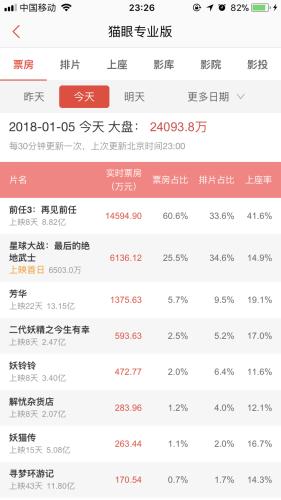
  Beijing, Jan. 6 (Reporter Zhang Xi) Recently, the small-budget movie Ex-3: Goodbye to Ex-3 (hereinafter referred to as Ex-3) stood out as the box office champion on New Year’s Day, far ahead of popular movies such as The Legend of the Demon Cat and Worry-Free Grocery Store. Although some netizens questioned the suspicion of water injection, both the producer and the distributor denied it, and some film critics believed that a big factor that made the film a dark horse was that it poked the audience’s own emotional experience.

  — — It broke 800 million in 8 days.

  "Former 3" became a dark horse at the box office on New Year’s Day.

  Precedent 3 is the third film in the Precedent series, directed by Yu-sheng Tian and starring Han Geng, Ryan, Romy and Kelly, which continues the comedy style of the previous two films.

Image source: screenshot of Cat's Eye Movie Professional Edition

  Image source: screenshot of Cat’s Eye Movie Professional Edition

  Since its release, the film has topped the single-day box office list for three consecutive days. According to the data of Cat’s Eye Professional Edition, as of 4:00 p.m. on the 5th, the box office of "Former 3" exceeded 800 million, and the number of films ranked as high as 33%, second only to the Hollywood film "Star Wars: The Last Jedi" on the first day of release.

  In contrast, Chen Kaige’s The Legend of the Demon Cat and Karry’s The Worry-Free Grocery Store, which have high hopes, all have a mediocre box office, especially The Legend of the Demon Cat, which has just broken 500 million at the box office for 15 days, with only 2% of the films arranged, which is obviously insufficient in stamina.

  It is worth mentioning that the first two works of the "predecessor" series, Predecessor Raiders and Predecessor Raiders 2, were released in 2014 and 2015, respectively, and won 129 million yuan and 251 million yuan at the box office. The current performance of Predecessor 3 has surpassed the sum of the box office of the two previous works.

"Ex 3" poster

  "Ex 3" poster

  — — Question: Is there anyone to see it when it snows heavily?

  The film retorted: The budget is so low, how to inject water?

  For the unexpected box office of "Previous 3", some netizens questioned it on the Internet and published screenshots. "Did someone go to see it under heavy snow?" "Is there a booking in the middle of the night?" However, some netizens responded that "there are more people at 10 o’clock than at 7 o’clock" and "I can’t buy tickets after work".

  In this regard, the reporter contacted and interviewed the person in charge of Beijing Infinite Freedom Culture Media Co., Ltd., one of the producers, and the other party denied it: "There is no possibility, our budget is so low, how can we inject water?" The person in charge of the distributor said that the film’s high ranking and good box office are due to the good quality of the film, and "good content is the first".

  In addition, the reporter found from the professional version of Cat’s Eye that the film is the most popular in second-tier cities, with an attendance rate of 19.2% and female audiences accounting for 60.8%, which shows that the film playing emotional cards is still more popular with female audiences.

Data Map: Starring Han Geng is enthusiastic about fans at the scene. Photo by Zhong Xin

  Data Map: Starring Han Geng is enthusiastic about fans at the scene. Photo by Zhong Xin

  — — Good luck or schedule?

  Poke the audience’s own emotional experience

  Why can this small-budget film stand out in the New Year’s Day schedule?

  Rao Shuguang, secretary-general of the China Film Association, bluntly said in an interview with reporters that on the one hand, the audience in the holiday schedule are willing to watch relatively relaxed movies. "Now the social attributes of movies are getting stronger and stronger, so the probability of winning comedy films in the holiday schedule is relatively high"; On the other hand, he thinks that "Ex 3" is very grounded. "Breaking up was a very heavy topic, but it eased everyone’s anxiety through comedy, which is also one of the elements of box office success."

  Some media also commented that when watching movies has become the daily entertainment of the public, ordinary audiences need not only large-scale production with swords and shadows, but also empathy experience. "The audience who gave praise generally thought that although the film was mediocre, it poked its own tears and made people feel emotional. They were not moved by the plot, but the film inspired their own emotional experience. "

  Judging from the film reviews on Douban, although many fans didn’t give a high rating, the topic of "predecessor" still sparked discussion. Rao Shuguang said that this is the biggest advantage of "predecessor 3", "making the audience feel brought in and have emotional identity".

"Ex 3" poster

  "Ex 3" poster

  — — Dilute the director’s personal color

  Division of labor to write scripts to find the audience’s resonance point

  Unlike some movies, Ex-3 has a screenwriter team, and everyone has a different division of labor: some people are responsible for the paragraphs, some are responsible for the structure of the film, and some are responsible for the lines, and finally they are handed over to the director Yu-sheng Tian, who will summarize and write.

  "The disadvantage is that it is difficult to unify and the speed is very slow. The advantage is that there are many different colors in it. I quite like this kind of collective creation, because it may be fast or easy for a person to create, but it will be too personal. " Yu-sheng Tian told reporters that he not only played down the director’s personal color, but also strengthened the authenticity. Many plots came from the real experiences of friends around him. "For the theme of urban love comedy, the most important thing is to find the resonance of the audience. People will not accept things that are too fairy tales or too fairy." (End)

1 pass 10 and finally 33! How did the super spread of Dalian epidemic occur?

  Xinhua News Agency, Dalian, January 6th  Question: 1 pass 10 and finally 33! How did the super spread of Dalian epidemic occur?

  Xinhua News Agency "Xinhua Viewpoint" reporters Cai Yongjun, Guo Xiang and Zhang Boqun

  From December 15th, 2020, Dalian City, Liaoning Province reported 4 cases of asymptomatic local infection. By 24: 00 on January 5th, 2021, 51 cases of confirmed local cases and 31 cases of asymptomatic infection had been reported. Among them, a confirmed case caused 10 people to be infected because of attending a family gathering, and since then, 33 cases of confirmed cases and asymptomatic infections have been caused by transmission.

  Dalian has initially locked in the source of the epidemic on the 3rd. The public is generally concerned: how did the super-transmission of 33 cases happen?

  65 cases were related to Jinzuo Commercial Building, and the confirmed cases had participated in family gatherings of 11 people.

  On December 15th, 2020, four porters of a cold chain enterprise in Dalian Port were found to be infected after their routine regular nucleic acid test results were positive. Yuan had been to the bathroom on the second floor of Jinzuo Commercial Building in Jinpu New District, Dalian on December 11th, 2020.

  Zhao Lian, deputy director of the Dalian Municipal Health and Wellness Committee, said that it is highly suspected that the spread of the epidemic in Jinzuo Commercial Building was triggered by someone named Yuan active communication. Since the first case involving Jinzuo Commercial Building was discovered on December 20, 2020, 65 cases of infection related to Jinzuo Commercial Building have been reported in Dalian.

  Jinmou, the owner of Jinzuo Commercial Building, said that he developed fever and other symptoms on December 15th, 2020, and took medicine by himself, and had a history of exposure to the source of infection, while others had no exposure history and the onset time was later than Jinmou. Gene sequencing and serum antibody analysis also preferred it to be the first generation case in the family, so epidemiological investigation identified it as the source of transmission of 10 family members. Kim’s family members spread out through multiple scenes. Five of Kim’s related cases went to the Second Affiliated Hospital of Dalian Medical University on December 17 and 18, 2020, causing multiple infections.

  "This round of epidemic has a strong spread and there is a phenomenon of super spread." Zhao Lian said that the confirmed case of Kim participated in a family gathering of 11 people when he was not ill, causing all the other 10 people to be infected in the later period. As of 24: 00 on January 2, including Kim, there were 33 cases of related confirmed cases and asymptomatic infected people. Among them, 21 cases were confirmed and 12 cases were asymptomatic.

  The source of transmission is the imported cold chain, and the virus has a long incubation period.

  The national, Liaoning and Dalian disease control departments conducted genome-wide sequencing analysis on the confirmed cases, asymptomatic infected persons and related environment and cargo samples of the Dalian epidemic, and the results supported that the transmission source came from abroad.

  Zhao Lian said that according to the preliminary analysis of the existing evidence, the vast majority of cases in this epidemic were infected by workers of a cold chain enterprise in Dalian Port who carried Covid-19-positive bulk goods on Russian freighters.

  Relevant experts said that the main characteristics of this epidemic in Dalian are the rapid spread of the virus, strong spread and many scenes involved, which is one of the factors leading to the phenomenon of super-spread.

  According to epidemiological investigation, on December 15th, 2020, when four asymptomatic infected people were reported in Dalian, the epidemic had spread rapidly in Jinzuo Commercial Building, and it had spread in the community during family gatherings and people gathering. Positive infected people were detected one after another, and five core areas where the epidemic was concentrated gradually emerged. From the introduction of Yuan Mou (case 5) into Jinzuo Commercial Building on December 11, 2020, to the implementation of closed control of key areas on December 21, 26 cases were infected after four generations of transmission in 10 days.

  Virus transmission involves many scenarios. The Jinzuo Commercial Building that Yuan Mou (Case 5) visited was located in the core business district of Jinpu New District in Dalian, with a large number of people and strong mobility, which led to the rapid spread of the virus. The prevention and control front, from the cold chain logistics terminal to the community, shopping malls, schools and hospitals, involves all kinds of people and multiple scenes, and the situation is complicated.

  Guo Xuan, director of the Center for Disease Control and Prevention of Dalian Municipal Health and Wellness Commission, said that compared with the last epidemic in Dalian, the virus in this epidemic was more bizarre and the incubation period was longer. Tang Yi, director of Dalian Civil Affairs Bureau, said that some cases showed positive after 11 nucleic acid tests, and some areas showed positive cases after 6 rounds of tests.

  On January 4th, Dalian informed a 23-year-old female patient named Duan that she had been transferred to a centralized isolation hotel as a close contact of asymptomatic infected people on December 22nd, 2020. During the isolation period, the results of four nucleic acid tests were all negative. On December 26, 2020, Duan was transferred to the hospital fever ward for isolation treatment. The results of many nucleic acid tests from January 1 were also negative, but the test results on January 3 were positive.

  Nucleic acid detection should be done, strictly control the gathering and extend the isolation time.

  Since the outbreak in Dalian, the core control circle centered on Guangzhong Street in Jinpu New District, the closed control circle in five street areas of Friendship, Advanced, Political Support, Guangzhong and Zhanqian in Jinpu New District, the key control circle in the whole area of Jinpu New District and the peripheral control circle around Jinpu New District have been set up, and different rounds of nucleic acid detection have been carried out according to different risk levels.

  At present, Dalian Jinpu New District is carrying out door-to-door nucleic acid detection for some areas on the basis of previous rounds of nucleic acid detection. Lv Dongsheng, deputy director of the management committee of Dalian Jinpu New District, said on December 29th, 2020 that the specific way is for the inspectors to take samples one by one at the door of residents’ homes to ensure that no one is missed and no cross-infection occurs. At present, the core control circle has completed 6 rounds of nucleic acid detection, and the closed control circle has completed 5 rounds of nucleic acid detection. Before Dalian started the full-time nucleic acid testing, the city completed 6.379 million tests.

  Experts said that from the epidemic situation in Dalian, it is necessary to strictly implement the "due inspection" and find the epidemic situation as soon as possible. The infection of four porters in a cold chain enterprise in Dalian Port was found in the weekly routine nucleic acid test of cold chain employees, another case was found in the admission test of newly hospitalized patients, and one case was found before taking the postgraduate exam. Since then, Dalian has gradually found positive infected people through close contact investigation and full-time screening in key areas.

  Experts believe that there are many factors in the phenomenon of super-communication. The suspected super-communication of Kim was mainly caused by family gatherings, which caused all the other 10 people to be infected in the later period and spread to the outside world. The public did not need to panic excessively, but it also sounded the alarm for activities such as gatherings.

  Zhao Lian said on January 3 that Dalian has initially locked in the source of the epidemic and basically mastered the transmission chain. In addition, according to the characteristics of this epidemic and the opinions of experts, Dalian decided to implement the "14+7" day control measures for people living at home and in centralized isolation, during which four nucleic acid tests were needed.

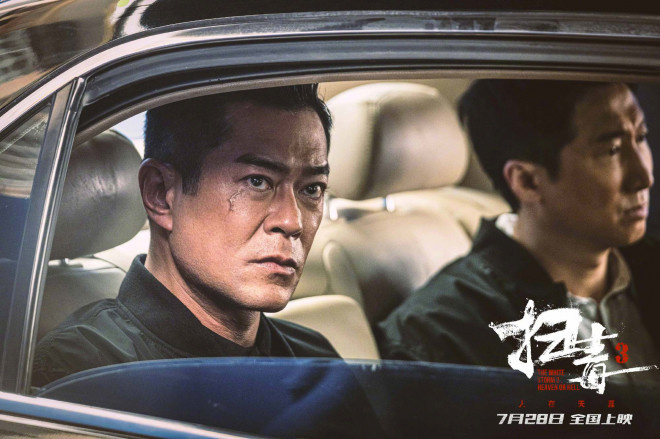
"Anti-drug 3" revealed the trailer, Liu Qingyun, Guo Fucheng, Gu Tianle leveled the Golden Triangle


1905 movie network news On March 30, the movie was exposed to the cinema version of the trailer, and the exciting gunfights, explosions, and bombing scenes made people dizzying, calling it enjoyable!,,, The three major actors first surged their acting skills on the same stage, and a bloody anti-drug storm was about to sweep in the summer on July 28.


In the movie "Anti-Drug 3: Man in the End of the World" released in the cinema version of the trailer, Liu Qingyun played Kang Sucha with two brothers on a luxury cruise ship to talk about the "ideal" after making a lot of money, Gu Tianle played Ou Zhiyuan said that he wants to "engage in environmental protection business and go public", Guo Fucheng played Zhang Jianxing plans to "buy an island and live the rest of his life", while Liu Qingyun’s sentence "I want to do the worst thing in the upper class" revealed the identity of the three drug dealers. Behind the "ideal" is full of drug production, drug trafficking and killing crimes. The succession of gunfights, explosions, bombings, and other popular scenes caused adrenaline to soar. Even a short 30-second image gave the audience a strong visual impact, which filled the audience with expectations.


It is not difficult to find through the preview that the movie "Anti-Drug 3: People in the End of the World" has been fully upgraded in terms of production, scenes, lineup, and stories on the basis of the praise and popularity of the first two series of works. Directed by the director who is good at police gangsters and action type films, it also gathered Guo Fucheng, Gu Tianle, and Liu Qingyun three king-level film masters to play on the same stage for the first time, and even invested heavily in Hong Kong, China 1:1 to restore the Golden Triangle drug village scene built nearly 50,000 flat for immersive anti-drug shooting. As one of the most influential Hong Kong classic IPs, "Anti-Drug 3" will surely shock the audience again this summer.


The film tells the story of the drug lord Kang Sucha (Liu Qingyun, played) has been taking his subordinate Zhang Jianxing (Guo Fucheng, played) to engage in drug dealing, and the new member Ou Zhiyuan (Gu Tianle, played) also has a life-threatening friendship with the two due to an accident, and the three are brothers. After Kang Sucha’s drug trafficking business in Hong Kong was investigated by the police, he fled to the Golden Triangle with his team, but accidentally discovered that there were undercover agents around him. At the moment, it is friend or foe, and I am at a loss…


The movie "Anti-Drug 3: People in the End of the World" is directed by Qiu Litao, starring Gu Tianle, Guo Fucheng, Liu Qingyun, and starring in ,、、、、、( Grizzly Bear),,,, Yuan Fuhua,, etc., will be released on July 28th.


Embarrassed BOSS direct hires: there are users, but they don’t make money

Author | salad dressing

Edit | Tang Fei

BOSS direct employment will be listed again.

On October 10th, BOSS (BZ.US, hereinafter referred to as "BOSS") announced that the company had submitted a dual major listing application to the Hong Kong Stock Exchange.

On June 11th, 2021, BOSS was directly hired to land on NASDAQ with an issue price of $19 per share. Since its listing, the share price of BOSS direct employment has fluctuated and declined. As of the close of October 26th, the share price of BOSS direct employment was reported at $12.46 per share, with a market value of about $5.5 billion.

Most analysts contacted by Value Planet believe that there are two main reasons for BOSS’s direct employment to return to Hong Kong for the second listing: first, to return to Hong Kong for listing in the global macro environment to avoid the possible delisting risk of China Stock Exchange in the United States; Second, it is to expand the scope of investors and seek new opportunities in the capital market.

In fact, in the just-released second quarter report of 2022, BOSS is facing a double decline in revenue year-on-year and quarter-on-quarter, while Zhaopin, which was previously listed, and Worry-Free Future also completed delisting and privatization in 2017 and this year. It seems that the profit dilemma has always been a nightmare that the recruitment platform can’t avoid.

Why is it so difficult to recruit this business as a just-needed industry?

1, the profit dilemma of BOSS direct employment

BOSS direct employment is facing the embarrassing situation of user growth and revenue decline.

In the published financial data of the second quarter of 2022, the average monthly users directly employed by BOSS reached 26.5 million, an increase of 5% compared with the previous quarter.

BOSS direct employment revealed at the financial report meeting in the first quarter of 2022 that as of May 31, the number of people who failed to register new users had reached 45 million, an increase of 15 million compared with the 30 million announced in the last quarter. If this part of users who fail to register successfully, it will further increase the overall active user data of BOSS direct employment.

According to the data compiled by Longbridge Dolphin Investment Research and QuestmoBile, the active users of BOSS direct recruitment platform have been gradually ahead of the traditional job-seeking platforms such as market direct recruitment and Zhaopin recruitment since the beginning of 2020, and their leading edge has continued to increase.

However, with the blessing of monthly users above the industry average, the direct employment of BOSS still faces a double decline in business year-on-year and month-on-month

In the second quarter, the direct employment of BOSS achieved revenue of 1.123 billion yuan, down 4.8% year-on-year and 1% quarter-on-quarter. This is also the first time that BOSS direct employment has faced a year-on-year and quarter-on-quarter decline in revenue for six consecutive quarters since the first quarter of 2021.

From the perspective of business split, the income of corporate users directly employed by BOSS decreased by 5% year-on-year, while the income of individual users increased by 20.2% year-on-year. The official explanation of BOSS’s direct employment is that the recruitment demand of force majeure enterprises such as epidemic situation is declining.

However, is this really the case?

Bella, a senior product manager, has different opinions. She said that BOSS hired directly to find a job and talked directly with the boss about this positioning to start the market. The initial solution was the pain point demand of communication barriers between job seekers and enterprises. However, in recent years, the positioning of BOSS’s direct employment as the main communication seems to be being imitated or even surpassed.

Bella further stated that the threshold for establishing social attributes is not high, and any job application can set a dialog box. At first, the direct employment of BOSS occupied the user’s mind with social attributes, so both job seekers and enterprises are more inclined to communicate directly with BOSS. However, with the new and old job applications such as hunting, lagou. com and Zhaopin, the advantages brought by the unique social positioning of BOSS direct employment are also being dispersed.

Job seeker Sasha told the value planet, "The speed and frequency of reply of enterprises directly hired by BOSS are obviously not as good as before." Sasha said that since 2019, she has registered for the direct employment of BOSS. In 2020, the probability of BOSS directly hiring a company to reply is 80%. "Now it is good for one-third of enterprises to respond, and the response time is getting longer and longer."

The enterprise HR Shang Shang said that the fitness of candidates recommended by BOSS direct employment seems to be decreasing.

"Recently, I was helping our company recruit an intern in the marketing department, but the direct employment of BOSS often pushed me to candidates who did not match my major or internship experience, which increased my screening time and cost." Shang Shang explained.

Another job seeker, Allah, said that the occupation recommended by BOSS directly is also very wrong. "I am a writer, but the direct employment of BOSS always pushes me to positions such as sales, advertising and even study abroad agency, which I have never visited and have no interest in." Allah said, "I now feel that the recommendation algorithm of BOSS direct employment is a bit regardless of what I need, even if they push whatever they have."

Bella said that in terms of the accuracy of the overall algorithm, BOSS direct employment did not really open a substantial gap with other recruitment platforms in China. When the differentiation advantage gradually slows down, even if users can still use it, they will change from a paying party to a "Bai Piao party". The core reason is that the services and information of this platform are no longer worth paying extra.

2. Who should the recruitment software "harvest"?

There are users, but they don’t make money. This seems to be the dilemma facing the entire recruitment industry at present.

The predecessors of the two major recruitment industries who once had the title of "North Zhilian, South Future" have withdrawn from the market. In 2017, Zhaopin, which was listed on Nasdaq for less than three years, was delisted. On March 1 this year, Worry-Free Future announced that it had signed a merger agreement with Garnet Faith Limited.

According to the revised merger agreement, the purchase price per share of Worry-Free Future decreased from $79.05 to $61.00, a decrease of 29.51%, and the equity value of the corresponding company was about $4.3 billion.

Worry-free future before delisting is facing the situation of expanding marketing and narrowing profits. According to the financial report, the net profit of Worry-Free Future in the first three quarters of 2021 was 46.6 million yuan, 182 million yuan and 130 million yuan respectively, down by 77%, 54% and 44% respectively.

In contrast, in the third quarter of 2021, the cost of worry-free services in the future increased by 24.3% year-on-year to 400 million yuan. Sales and marketing expenses increased by 46.0% year-on-year to RMB 457 million.

The direct employment of BOSS, which went public last year, also experienced three consecutive years of net losses by the end of 2021. The financial report shows that the direct employment net losses of BOSS in 2019-2021 were 734 million, 1.226 billion and 1.235 billion yuan respectively. In the second quarter of 2022, perhaps drawing lessons from the past, BOSS directly hired to control marketing and R&D expenses, and its marketing expenses were 400 million yuan, down 23% year-on-year. R&D expenditure was 301 million yuan, up from 78% in last quarter to 23% in this quarter.

On the whole, the profit dilemma of the recruitment platform is inseparable from two core dilemmas:

First of all, at present, most of the recruitment software is realized by attracting a large number of job seekers through the free payment of C-end, and then charging B-end with high monthly salary. However, more and more enterprises are dissatisfied with the charging model of recruitment software.

On the black cat complaint, there are many complaints with similar words as "Zhaopin recruitment induced renewal fee". Every enterprise user directly hired by BOSS also told the value planet that during the years of using BOSS directly, it was obvious that its charging standard was rising.

For example, at the beginning, jobs with strong liquidity and high demand like sales were labeled as’ hot jobs’ by the first batch, and the BOSS direct employment would charge for the release of these hot jobs. One is post type, and one post is 98 yuan/month. The other is the annual fee, which is 3,600 yuan per year, which can send five hot jobs. "As early as the end of 2019 and the beginning of 2020, the direct employment of BOSS has increased once, and the annual fee has changed from 3,600 yuan to 4,800 yuan." Everyone recalled.

Later, BOSS directly hired and launched other charging products, such as a "resume bomb", which can push the post to 100 qualified candidates. Or a "chat card" worth 368 yuan, allowing enterprises to search for candidates who meet the recruitment requirements and get in touch with them. "A card costs 368 yuan and can be used 40 times." Every family introduced.

However, the increase of charging items has not brought about the improvement of personnel quality. The scale and quality of the job market will not be improved because of the payment of enterprises, so the feeling of enterprise users is that they are constantly being "harvested" but they have not saved time and effort in recruitment.

Over time, enterprises will reduce the payment action on the platform, or even give up using the platform directly.

Secondly, the services provided by recruitment software tend to be more and more homogeneous.

A senior HR in Beijing recalled that many years ago, various recruitment platforms had different positioning. Zhilian mainly targeted at administrative and sales positions. BOSS directly hired for accounting and sales at first, and then extended to technical posts. Hunting focused on high-paying poaching, while Lagou focused on Internet operations. But now, the position positioning of recruitment software is becoming more and more vague.

Later, in order to cover more users, the recruitment platform can only give up the vertical field and become "big and complete".

A middle-aged job seeker complained to the value planet that he spent a lot of money to recharge the members he had hired, only to find that the positions he had been pushed to could also be found on BOSS. "There are even some relatively junior sales positions appearing in the recruitment."

Under the condition that it tends to be homogeneous and the algorithm cannot be qualitatively different, the major platforms can only compete for advertising. So, we saw the direct employment of BOSS, which is full of subways, and the future of contracting the elevator. ……

3. What is the difficulty in recruiting business?

Job hunting is obviously a necessity, but why is it so difficult to recruit this business?

Because ToB is still ToC, this is a difficult problem.

The core users of recruitment software are all B-end users, but they need strong C-end user data to impress B-end users, which makes recruitment software fall into the dilemma of "please B-end or C-end".

In the matter of recruitment, enterprises hope to interview the most suitable candidates at the lowest cost, while candidates hope to interview the enterprises with the best treatment in the shortest time. The demands of B-end and C-end are inherently conflicting.

Previously, Qiujing. com, which focused on enterprise evaluation, closed the evaluation system, which also showed that the recruitment software function of "pleasing" C-end users seemed to only "offend" B-end.

BOSS direct employment has quickly gained the favor of users with the positioning of "talking directly to the BOSS", but with the decrease of the response rate of boss direct employment enterprises and the increase of the number of "unreliable" enterprises, this special advantage seems to be weakening.

Therefore, in the case that the core contradiction cannot be resolved, major recruitment software can only "roll" the number-attracting both B-end and C-end users with a large number of resumes and positions. Indeed, more opportunities and candidates are the common needs of job seekers and enterprises, but this inevitably makes all recruitment software face another problem-homogenization and inaccurate recommendation.

"The essential reason why recruitment software is difficult to break through is the’ basic contradiction’ that is difficult to reconcile between job seekers and enterprises." Bella said. Regarding the direction of future recruitment software optimization, she said that technology-based and more accurate recommendation algorithm is the core competitiveness for both C-end users and B-end users.

In the final analysis, the pure information intermediary mode only involves the shallow communication of the resume, and the two parties in the follow-up transaction are separated from the platform and cannot complete the closed loop, which makes the platform always stay in the position of "billboard", and it is difficult to get the initiative and market pricing power, and finally go to the collective decline.

* This article is written on the basis of public information, only for information exchange, and does not constitute any investment advice.

What’s the cheapest price for Maserati?

Maserati is an Italian luxury car brand with many models and different prices. Among them, the cheapest model is Maserati Ghibli, which costs 8.99 million yuan. The most expensive model is the MC12 supercar, which sells for tens of millions. In addition, there are president cars, Levante luxury SUVs, Ghibli cars and other models, with prices ranging from 86.88 million to 21.05 million. The starting price of Maserati President’s car is 140.58 million yuan, and the starting price of Levante luxury SUV is 96.18 million yuan. The GranTurismo model is Maserati’s respect for customers, and the price is between 86.88 million and 21.05 million. If you want to buy an entry-level Maserati, the price is about 800,000 yuan. The most expensive model is the MC12 supercar, which sells for tens of millions. As an ultra-luxury brand, Maserati does not have a car with a price of more than 200,000 yuan. Different models have different prices and need to be selected according to their own needs and budgets. It is worth mentioning that the exterior design of Maserati models is amazing, especially the vertical mesh design with heavy chrome trim, which leaves a deep impression on people. In addition, Maserati also launched some limited-edition models, such as COUPE models, which cost about 13.8 million yuan. Finally, it needs to be reminded that after-sales service and maintenance should be taken into account when purchasing Maserati, because the higher-priced models need to invest more money and energy.

MC12

[Reporter’s investigation] Kindergarten WeChat chooses Mengbao to attract parents to pay for tickets.

  On November 20 th, Zhongan Online reported to this reporter that the kindergarten where the child is located is holding the "Most Cute Baby" selection activity on WeChat. It seems to be a simple vote, but there are behaviors such as spending money to "increase tickets", which brings a lot of troubles to children and parents.

  According to the reporter’s investigation, there is an "option" to buy gifts at a high price, and the maximum amount of gifts purchased is more than 600,000 yuan. At present, the activity has been urgently stopped by the education authorities.

  Parents who broke the news: the selection of Mengbao made parents spend money to increase tickets.

  The exposer reported that recently, the kindergarten where his children are located is holding the "most cute baby" selection activity. The activity started on November 16th and lasted for one week until the 22nd.

  "Because the class teacher asked for cooperation, and the children were very motivated, parents were still very enthusiastic about it and forwarded the canvassing among relatives and friends." The informant said, but these days, his children often complain at home, saying that a relative of a certain family gave a castle and won two thousand votes, so why didn’t my family have a gift?

  Parents feel strange that small voting focuses on participation, but I don’t know why there is a feeling of showing off wealth in children’s hearts. Small-scale garden selection is mixed with strong commercial factors, and the selection has become a show of wealth, which has changed in the hearts of children, and parents around are discussing this matter.

  At 4 o’clock in the afternoon, the reporter logged into the voting page and found that 31 children signed up for the selection activity, and the link reflected by the exposer was only one of them.

  Click to enter the "Give Gifts" page, and you can see virtual gifts such as cars (1 o’clock), airplanes (10 o’clock), cruise ships (50 o’clock), rockets (100 o’clock), and golden flying cars (200 o’clock). The most expensive gift is the Dream Castle (500 o’clock). A "point" is worth one yuan for three votes, and the more points you buy, the more votes you will get. If you spend 500 yuan to send a dream castle to your child, you can increase 2000 votes.

  As of press time, on the afternoon of November 22nd, the reporter clicked the "list" option again and found that the child with the highest number of votes had reached 10,611. Below the photo of the child with the second largest number of votes, it can be clearly seen that the child has more than 9,000 votes and 114 gifts. From the "gift list" below, you can see at a glance who gave what gift.

  The reporter found that the second-ranked child received the most gifts, with 114 gifts.

  Kindergarten: Parents have been reminded not to buy gifts.

  Subsequently, the reporter contacted the garden. A teacher in the garden said in a telephone interview that there is indeed a phenomenon of spending money on gifts in the selection activities, but the garden has reminded parents not to buy them.

  According to the teacher of the garden, not long ago, a Hengxinda advertising media company found the garden and said that there was a WeChat voting activity. Only the kindergarten provided photos, the company made links, and the parents were responsible for voting. After the selection, the first, second and third prizes were made public and gifts were distributed.

  When learning that the selection activities can help promote the kindergarten as well as the children in the kindergarten, the garden expressed its willingness to participate.

  After the official start of the activity, the garden found that there was a purchase of gifts in the voting link, and the garden immediately reminded parents not to buy gifts among the parents.

  The teacher of the garden said that according to Hengxinda Advertising Media Co., Ltd., there are gifts to participate in this selection activity, and the gifts are provided by Hengxinda Company. The first prize is the brand tablet computer, and the top three have honorary certificates. At the same time, there is also a vote prize. The prize with 19,999 votes is an astronomical telescope, and with 29,999 votes, you can get an electric balance car.

  As for the parents’ money for buying gifts, Hengxinda said that it is used for charity, and after the activity, the company will provide a list of kindergartens to explain which money for buying gifts is used for which charity.

  As for where the money went now, the garden replied that it was not clear.

  Competent department: Stop voting activities urgently.

  The reporter then reflected this matter to the county education bureau where the kindergarten is located.

  After preliminary investigation, the county education bureau believes that the selection activity of the "cutest baby" in kindergarten to send gifts and canvass is definitely wrong, and the garden has been ordered to stop the online voting of "cutest baby".

  "The legitimacy of the selection platform is in doubt. Even if parents of students voluntarily buy gifts for their children, it is illegal. " In the interview, the head of the pre-school education section of the county education bureau said that this selection activity is likely to be an online scam. Because according to the law, it is impossible to raise votes with money in any legal selection activities.

  After the decision, the county education bureau immediately stopped the kindergarten’s "most cute baby" selection activity and asked the kindergarten to apologize to the parents in writing immediately. For the parents of students who have paid for gifts, the garden will negotiate with Hengxinda Advertising Media Company for a refund after counting the payment amount. If Hengxinda Advertising Media Company does not refund the money, the kindergarten will refund the parents in full and call the police to investigate the legal responsibility of the online voting company.

  As of press time, on the afternoon of the 22nd, the county had issued a notice, ordering kindergartens at all levels in the county not to participate in such activities. At the same time, all kindergartens were surveyed and found that this phenomenon was stopped immediately.

  The county education bureau will pay close attention to the handling of this matter in kindergartens. In the future, all kinds of selection activities of this kind of education will be strictly controlled. (Reporter Gu Jiyue Intern Qin Zhou)